
Reviewed · COLOSSEUM & ANCIENT ROME TOURS
Colosseum and Palatine Hill: Unveil Rome’s Ancient Spectacles
Rome can hit you fast, then slower.
This guided route turns the Colosseum, Roman Forum, and Palatine Hill into one connected story of power, myth, and daily politics. I like that you get reserved entrance and a certified English guide who helps you see what you’d otherwise miss in the stone. One thing to keep in mind: it’s a shared group tour, so the pace can feel busier than a private outing.
What I really liked is how each stop has a clear purpose: the Colosseum as spectacle, the Forum as government and religion, and Palatine Hill as the myth-and-emperor neighborhood of Rome. A second plus is the small dose of real-world planning built in, like a mobile ticket and online support near boarding time. The main drawback is that group size (up to 24) can make questions harder, and the start time can sometimes shift if the exact slot isn’t available.
In This Review
- Key points to know before you go
- Colosseum entry: what to look for in the world’s biggest amphitheater
- Roman Forum on the Via Sacra: where politics, religion, and street parades met
- Palatine Hill: the Romulus-and-Remus legend and the emperor neighborhood
- Time, pace, and how a shared group tour feels
- Tickets and names: the small details that prevent big headaches
- Price and value: what you’re really paying for
- Should you book this Colosseum and Palatine Hill tour?
- FAQ
- How long is the tour?
- Is this a private tour?
- What language is the tour offered in?
- What’s included in the price?
- What do I need to bring for entry?
- Where does the tour start and end?
- Can I cancel for a full refund?
Key points to know before you go
- Reserved entry helps you avoid the worst of the day’s ticket chaos at the Colosseum and Forum
- Three connected sites in about 2 hours, so you see the big arc of Roman life and legend without a full-day commitment
- Via Sacra + major Forum ruins give you names to match the monuments, not just random columns
- Palatine Hill isn’t filler: you’ll get the Romulus-and-Remus myth layer plus the palaces and temples viewpoint
- Shared group (1 to 24 people) means a more structured tour and less room for long back-and-forth questions
Colosseum entry: what to look for in the world’s biggest amphitheater
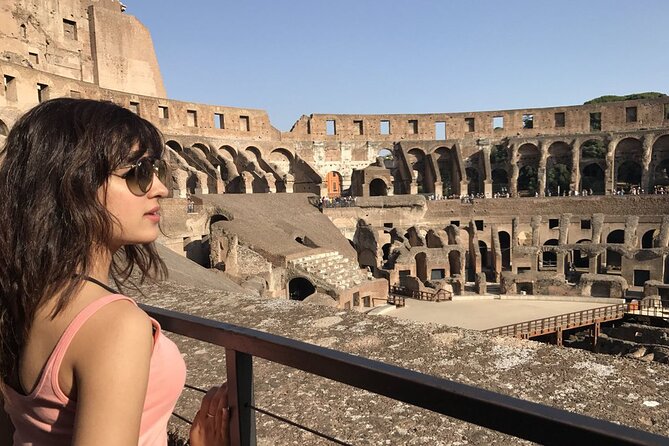
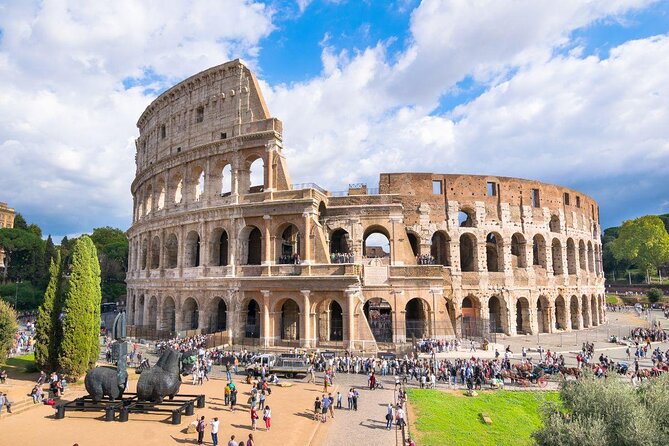
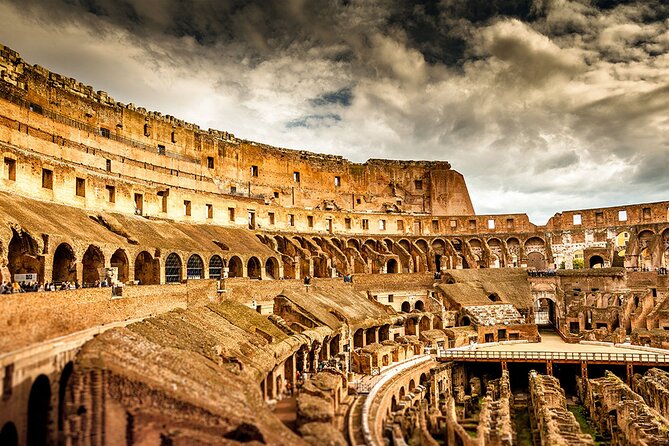
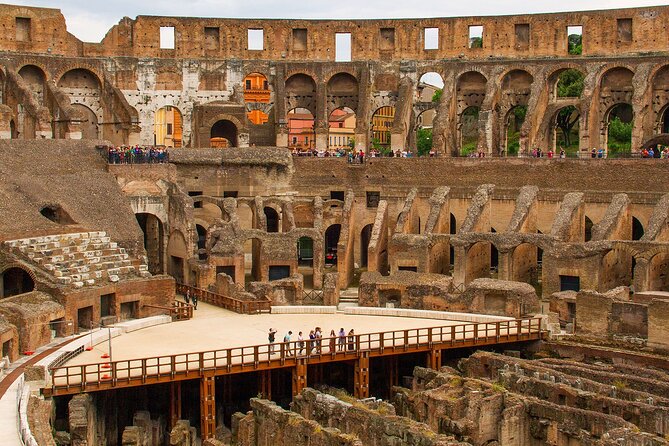
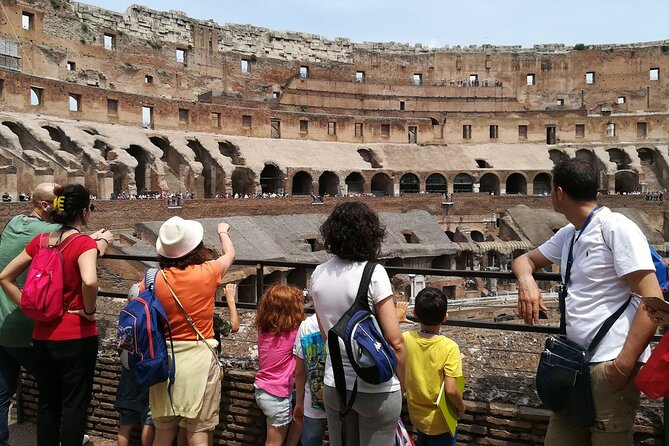
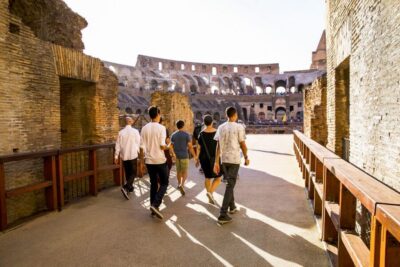
The Colosseum is the obvious star, but what makes this stop worth your time is learning how to read it. You’re not just staring at arches; you’re seeing a building designed for crowd control, spectacle, and status. This amphitheater—also called the Flavian Amphitheater—was built in the Flavian era, with construction started by Vespasian in 70 AD and completed under Titus, inaugurated on April 21, 80 AD, with later changes during Domitian’s reign.
Here’s a practical trick: when you get your first clear view, look for how the structure scales. Estimates range from 50,000 to 87,000 spectators, and that size changes how you should think about Roman entertainment. This wasn’t a local event; it was a national stage.
You’ll also learn why the name “Colosseum” is actually a Middle Ages label based on the Latin idea of something colossal. That’s one of those details that makes the ruins feel less like a postcard and more like a real place that went through centuries of change.
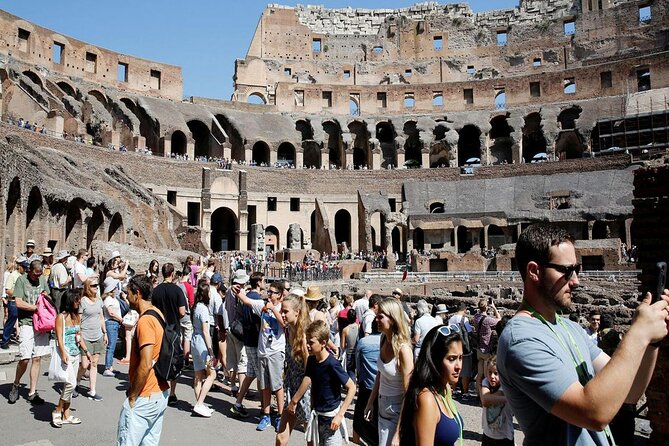
For photos: arrive with your expectations set. You’ll get plenty, but the crowd flow is real. Going in with a “walk, look, listen, then photograph” mindset keeps the experience smooth.
Still on ancient Rome? A few more we rated
- Rome: Colosseum, Palatine Hill and Roman Forum Guided Tour
★ 4.8 · 32,814 reviews - Rome: Guided Tour of Colosseum, Roman Forum & Palatine Hill
★ 4.7 · 27,897 reviews - Rome: Colosseum & Forum with Audio Guide App -Optional Arena
★ 4.2 · 24,770 reviews - Rome: Colosseum, Roman Forum and Palatine Hill Guided Tour
★ 4.5 · 23,903 reviews
Roman Forum on the Via Sacra: where politics, religion, and street parades met
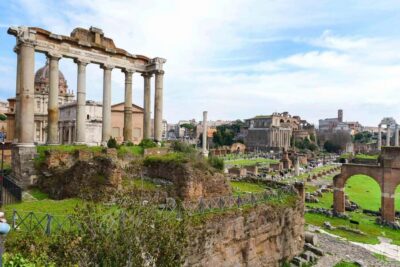
After the Colosseum, the vibe changes. The Forum is quieter but packed with meaning. This rectangular space sat in the center of Rome’s civic life—starting as a marketplace—and it became known as the Forum Magnum. Your guide takes you along Via Sacra, the main street where triumphs and ceremonies played out in front of emperors, generals, and ordinary citizens.
What you’re aiming to notice is how government and religion overlap here. You’ll pass and enter areas tied to ancient power, including the old Senate interior and the dwellings associated with the Vestal Virgins. You’ll also look at the Temples of Vesta and other key structures such as the Temple of Septimius Severus and the Triumphal Arches of Titus.
One reason this stop feels powerful is the timeline you get through the explanations: the monuments you’re seeing relate to the city’s life going back to very early periods, even as far back as the 7th century BC for the Forum’s earlier context. In other words, you’re not just touring famous buildings. You’re walking inside the idea of Rome as a system—commerce, faith, and political messaging in the same square.
A small caution: the Forum can be mentally overwhelming. The ruins don’t come with a neat instruction manual. If you want the most value, go with one goal for the stop: pick a theme (power, religion, or public spectacle) and listen for how the sites connect to that theme.
Palatine Hill: the Romulus-and-Remus legend and the emperor neighborhood
Palatine Hill is often treated like the “bonus” stop. Don’t let that fool you. It’s one of the most important places to understand Rome because it sits above the Forum, above the Circus Maximus, and above the story Rome told itself about where it began.
Your guide brings in the legend of Romulus and Remus—Rome’s founding myth—and you’ll see why the hill matters for that narrative. Then the tone shifts again to daily elite life: the palaces and temple areas on Palatine were home to emperors, and the remains you can see from a distance help you picture how rulers lived with the city opening below them.
A practical way to enjoy Palatine Hill: use the views. Even when you’re surrounded by ruins, the height gives you context. From up there, it’s easier to imagine how the emperors controlled visibility—how being close to power meant being close to the city’s main stages.
The “drawback” here is also the hill’s strength: it can feel like a lot in a short time. With only about 40 minutes, you won’t get a slow, museum-style experience. But if you’re the type who likes to connect myths to places, this stop lands well.
Time, pace, and how a shared group tour feels
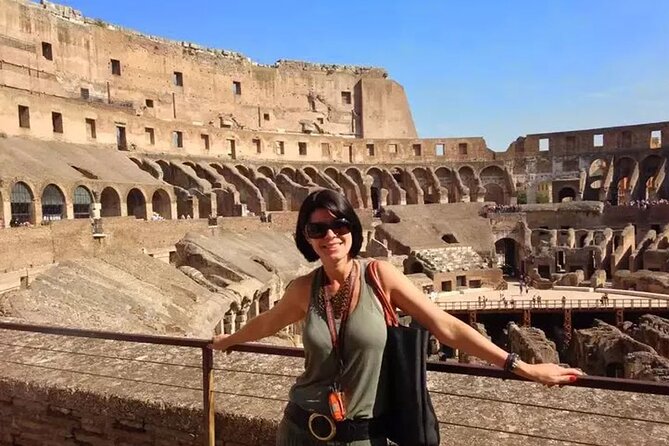
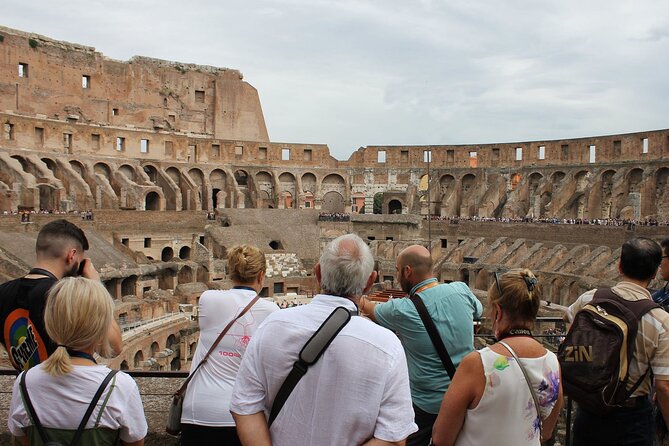
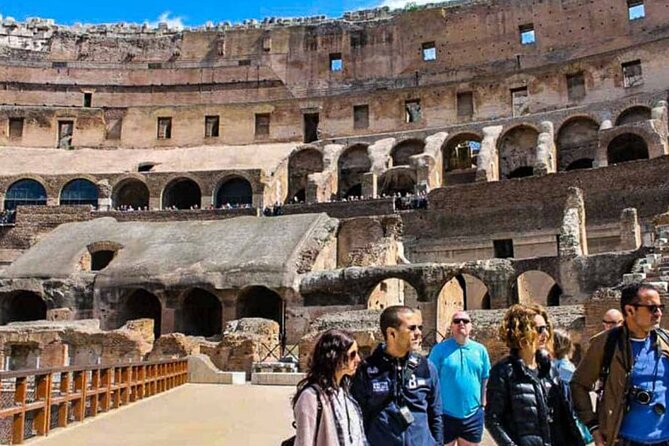
This is described as a shared tour, and that shows in the pacing. You could have anywhere from 1 to 24 people in your group, with a max of 24 overall. That range matters, because it changes how long you can pause, ask a question, or linger at a viewpoint.
In one of the experiences tied to this tour, a guide named Francesca stood out for being pleasant, fluent in English, and good at explaining what you’re seeing. That matches what you want: at these sites, the guide’s job is to help you sort fact from guesswork and make the architecture usable.
In contrast, another concern that can come up with group formats is the “too many people at the start” effect. If you’re the kind of traveler who likes quiet questioning, you may find the group flow limits your conversation time. If you know this is your style, choose your moments: ask one good question early, then let the guide’s story carry the rest.
Also note the tour is about 2 hours total, with roughly 40 minutes at each stop. That schedule is efficient, but it’s not slow. You’ll cover big ground without getting lost in single-site depth.
Tickets and names: the small details that prevent big headaches
This tour uses a mobile ticket, and you’ll get online consultant support around boarding time. The key practical point is the identity match rule: each traveler must present a valid passport or ID document that matches the name provided at booking for entry into the Colosseum and Roman Forum.
That detail is worth taking seriously, because name mismatches are one of the most common reasons people get stuck at entry points on high-demand days. So before you go, double-check your booking name exactly matches your document—spelling, spacing, everything.
The meeting and routing also keep things simple. You start at Via di S. Giovanni in Laterano, 14, 00184 Roma RM, Italy, and the activity ends back at the same meeting point. No round-trip hotel transfer is included, so plan on using public transportation or walking a bit.
One more reality check: if the exact time you choose isn’t available, you can be transferred to another time on the same day. And for last-minute reservations, if seats are limited, you might be moved to the following day. If your schedule is tight, this tour works best when you keep buffer time around it.
Price and value: what you’re really paying for
At $162.19 per person for about 2 hours, the price looks steep at first glance—until you break down what’s bundled. Your entry isn’t just general admission. You’re getting entrance tickets for Palatine Hill and the Roman Forum, plus Colosseum admission and a Colosseum reservation fee (listed as valued at €18 for the ticket and €2 for the reservation).
So you’re paying for three things at once:
- Reserved access that helps reduce wasted time
- A certified guide who gives you the story behind what you’re seeing
- A structured route that links the sites, rather than three separate random visits
That’s why this can still feel like good value if you’re visiting for a short stay or you know you’ll struggle to make sense of the Forum without guidance.
If you’re the kind of traveler who loves independent wandering with zero timing structure, you might compare costs with self-guided entry and audio. But if your goal is to understand Rome while you’re standing in front of it, this format usually pays off.
Should you book this Colosseum and Palatine Hill tour?
I’d book it if you want the “main story” of ancient Rome in one efficient session: Colosseum → Forum → Palatine Hill, with reserved entry and an English guide. This is a strong choice for first-timers who don’t want to spend their day trying to decode what everything means. It’s also a good match if you’re trying to avoid ticket bottlenecks and you appreciate a clear, structured route.
I’d think twice if you need lots of personal space and long Q&A time, since it’s a shared group up to 24. And if you’re planning other tight timed activities the same morning, build in flexibility because the schedule can shift when a selected time isn’t available.
Bottom line: if you want a guided “Rome of empire and myth” snapshot, this hits the key notes fast and fairly well.
FAQ
How long is the tour?
The tour is about 2 hours (approx.), with around 40 minutes allocated to each stop: the Colosseum, the Roman Forum, and Palatine Hill.
Is this a private tour?
No. It’s a shared tour. The group can be 1 to 24 people (maximum 24 travelers).
What language is the tour offered in?
The tour is offered in English.
What’s included in the price?
A certified guide, mobile ticket, and online support. Entrance tickets included for Palatine Hill, the Roman Forum, and the Colosseum, along with the Colosseum reservation fee.
What do I need to bring for entry?
You’ll need a valid passport or identification document, and the name must match what you used at booking.
Where does the tour start and end?
It starts at Via di S. Giovanni in Laterano, 14, 00184 Roma RM, Italy and ends back at the same meeting point.
Can I cancel for a full refund?
Yes. You can cancel up to 3 days in advance for a full refund. If you cancel less than 3 days before, the amount paid isn’t refunded.
More Tour Reviews in Rome
- Vatican Museums, Sistine Chapel & St. Peter’s Basilica Tour
★ 4.3 · 73,970 reviews - Vatican Museums, Sistine Chapel & St Peter’s Basilica Guided Tour
★ 4.5 · 39,149 reviews - Rome: Colosseum, Palatine Hill and Roman Forum Guided Tour
★ 4.8 · 32,814 reviews - Rome: Guided Tour of Colosseum, Roman Forum & Palatine Hill
★ 4.7 · 27,897 reviews - Rome: Colosseum & Forum with Audio Guide App -Optional Arena
★ 4.2 · 24,770 reviews - Rome: Colosseum, Roman Forum and Palatine Hill Guided Tour
★ 4.5 · 23,903 reviews
Ancient Rome, Kept Going
- Rome: Colosseum, Palatine Hill and Roman Forum Guided Tour
★ 4.8 · 32,814 reviews - Rome: Guided Tour of Colosseum, Roman Forum & Palatine Hill
★ 4.7 · 27,897 reviews - Rome: Colosseum & Forum with Audio Guide App -Optional Arena
★ 4.2 · 24,770 reviews - Rome: Colosseum, Roman Forum and Palatine Hill Guided Tour
★ 4.5 · 23,903 reviews - Rome: Colosseum Arena Floor, Palatine & Forum Guided Tour
★ 4.5 · 20,180 reviews - Rome: Colosseum Arena, Palatine Hill & Forum Guided Tour
★ 4.7 · 14,510 reviews
Just added to our Rome reviews





Colosseum & Ancient Rome Tours, compared.
 ★ 4.8Colosseum, Palatine Hill and Roman Forum Guided TourFrom $5232,814 reviews
 ★ 4.7Guided Tour of Colosseum, Roman Forum & Palatine HillFrom $5527,897 reviews
 ★ 4.2Colosseum & Forum with Audio Guide App -Optional ArenaFrom $4124,770 reviews
 ★ 4.5Colosseum, Roman Forum and Palatine Hill Guided TourFrom $5923,903 reviews
 ★ 4.5Colosseum Arena Floor, Palatine & Forum Guided TourFrom $4120,180 reviews
 ★ 4.7Colosseum Arena, Palatine Hill & Forum Guided TourFrom $8414,510 reviews
 ★ 4.6Colosseum,Forum & Palatine Tour + Optional Arena FloorFrom $4513,169 reviews
 ★ 4.7Colosseum: Underground and Ancient Rome TourFrom $16012,691 reviews