
Reviewed · COLOSSEUM & ANCIENT ROME TOURS
Colosseum & Ancient Rome Access with a Host
A maze of ruins, but it’s laid out well. This Colosseum & Ancient Rome access experience is built for stress-free time inside the big three: Colosseum, Roman Forum, and Palatine Hill—with a host to get you started and an audio guide on your phone to keep you moving on your schedule. I especially like the freedom to pause, backtrack, or linger when something catches your eye, instead of sprinting between photo stops.
Two more things I like: skip-the-line entry helps you spend your energy where it counts, and the audio guide + site map pair well with exploring at your own pace. The one big consideration is tech and timing: you’ll need a working smartphone setup (including cellular signal) and you must have your ID/passport match the names on your booking for entry.
In This Review
- Key Highlights You’ll Feel From Step One
- The Best Use of Your Time in Rome’s Big Three
- Entering The Colosseum Without the Long Waits
- Roman Forum: Where You Can Feel the Daily Power
- Palatine Hill: The Rome Story With Better Vantage Points
- Phone Audio and the Site Map: The Real Key to Enjoyment
- Host Help: What You Get and What You Should Not Expect
- Price and Value: What You’re Really Paying For
- Logistics That Matter: Names, ID, and Finding the Host
- When This Experience Can Go Wrong (and How to Reduce the Odds)
- Who Should Book This Colosseum and Ancient Rome Access?
- Should You Book It? My Decision Guide
- FAQ
- What’s included in the tour price?
- Do I need a smartphone for the audio guide?
- Is arena floor or underground access included?
- How long does the experience take?
- Where do I meet the host?
- Do I need to bring ID or a passport?
- How many people are in the group?
Key Highlights You’ll Feel From Step One
- Skip-the-line entry to the Colosseum, so you’re not stuck in ticket chaos
- Phone audio guide and a site map, letting you explore without returning gear
- Host assistance at the meeting point to get you through the first hurdle
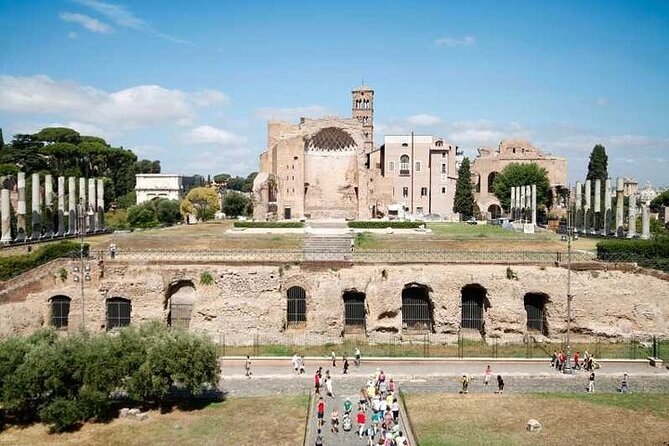
- Self-guided time at Roman Forum and Palatine Hill, with audio to steer you
- Small group size (up to 12) for a calmer flow
- No arena floor/underground access, so it’s classic viewing rather than the most extreme access
The Best Use of Your Time in Rome’s Big Three
Rome’s ancient sights are popular for one reason: they’re unbelievably real. But the hard part is not loving them—it’s managing the crowds, the lines, and the chaos that shows up when dozens of groups hit the same entrances.
This experience is designed around that reality. You get reserved Colosseum entry plus audio and mapping so you can keep momentum without feeling trapped in a rigid schedule.
The other nice part is how it balances support and independence. You’re not left completely alone at the start: a host helps with the meeting point and gets you into the right flow. After that, the experience becomes self-guided, which is exactly what you want if you hate being yanked along every time you stop for a better look.
Still on ancient Rome? A few more we rated
- Rome: Colosseum, Palatine Hill and Roman Forum Guided Tour
★ 4.8 · 32,814 reviews - Rome: Guided Tour of Colosseum, Roman Forum & Palatine Hill
★ 4.7 · 27,897 reviews - Rome: Colosseum & Forum with Audio Guide App -Optional Arena
★ 4.2 · 24,770 reviews - Rome: Colosseum, Roman Forum and Palatine Hill Guided Tour
★ 4.5 · 23,903 reviews
Entering The Colosseum Without the Long Waits
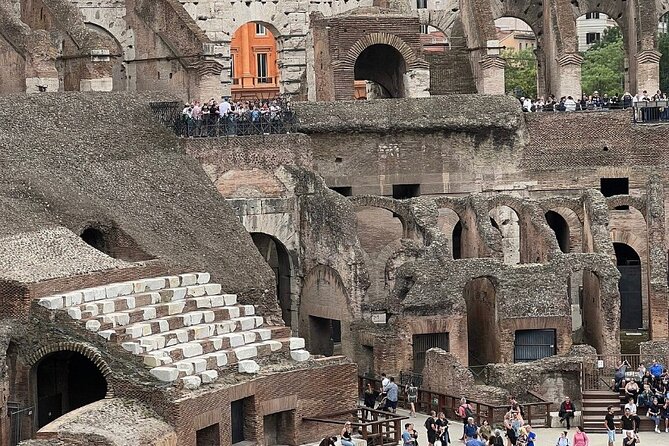
The heart of this experience is reserved entry to the Colosseum. That matters because the Colosseum has two kinds of lines: the official one, and the one where people drift while trying to figure out what to show and where to stand. Skip-the-line access helps you sidestep the slow parts and aim straight at the good parts.
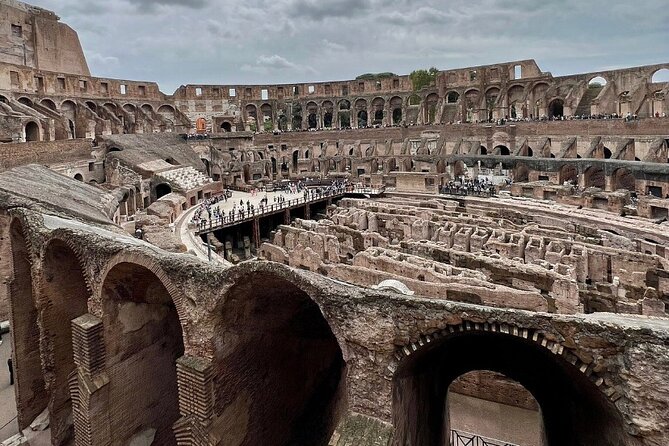
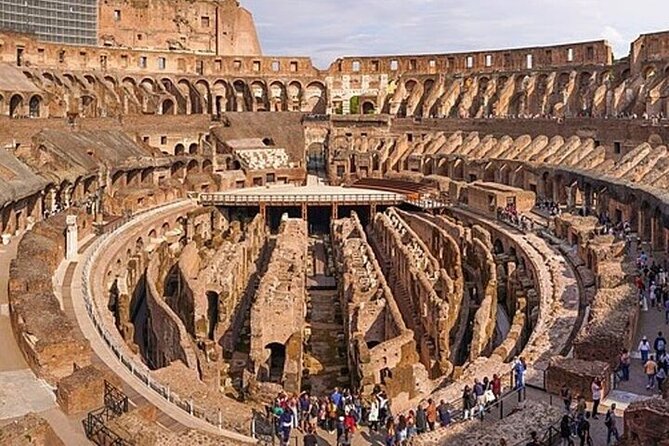
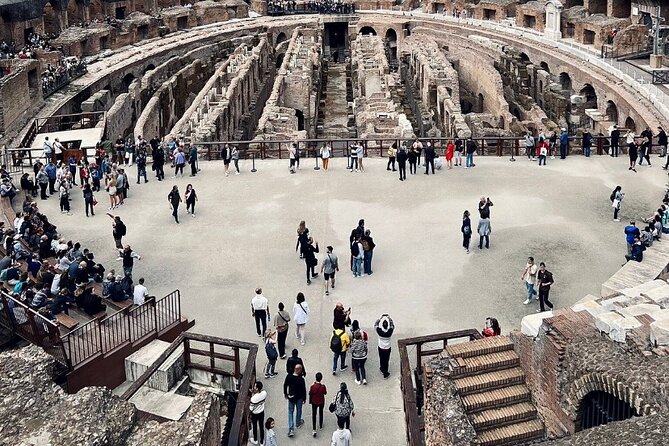
Once inside, you’ll spend about an hour in the Colosseum itself. That hour is your chance to understand what you’re looking at—tiers of seating, the scale of the arena space, and the ways the building shaped Roman entertainment. Instead of being forced into a script, you can use the audio guide at the pace that fits you.
One point to know: the experience includes Colosseum access ticketing, but arena floor and underground access are not included. If you’re dreaming about stepping onto the arena level or seeing the subterranean passageways, you’ll need a different add-on or a different ticket type than what’s included here.
Also bring your expectations down to earth: the Colosseum complex is enormous. Even with reserved entry, you’ll still want comfortable shoes and a plan for walking and changing levels.
Roman Forum: Where You Can Feel the Daily Power
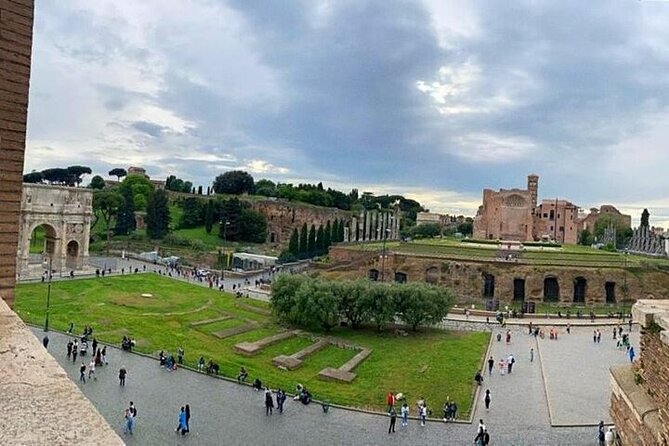
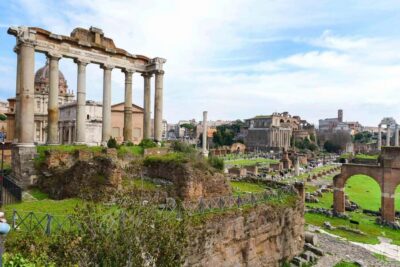
After the Colosseum, you’ll shift to the Roman Forum, often considered the political and commercial core of ancient Rome. This area is not one single monument—it’s a whole landscape of ruins where temples, civic buildings, and marketplaces overlap.
Your time here is about an hour, and it’s set up for self-exploration. That means you’re free to stop at key ruins, read the audio, and move when you’re ready, not when the group moves. If you like wandering with a purpose, this format works well because the audio provides structure while the map helps you not get lost in the maze.
One drawback to self-guided exploring: you have to do a bit of work yourself. The audio guide and map help a lot, but if your phone battery dies or the audio doesn’t load, you can end up staring at stones with no easy way to connect the dots.
So I’d treat Forum time like an opportunity to slow down. Even though one hour is the “slot,” the Forum rewards curiosity more than speed.
Palatine Hill: The Rome Story With Better Vantage Points
Palatine Hill is where the Roman legend-meets-reality vibe really lands. It’s one of Rome’s seven hills and was central to the city’s story, so it tends to feel less like a single site and more like a whole backdrop for how people lived.
You’ll get about an hour here. This is a good chunk of time because Palatine is full of viewpoints and layered ruins. If your feet are tired from the Colosseum, Palatine offers chances to pause and reset—some areas naturally encourage a stop-and-look rhythm.
A smart move is to let the audio guide do the “why this matters” part while you do the “where can I see” part. When the audio explains the role of a space, it becomes easier to understand why the hill mattered so much.
And when you’re ready to breathe, this is also a nice area to take your time because the pacing is yours. You’re not constantly searching for the next meeting point with the same group.
Phone Audio and the Site Map: The Real Key to Enjoyment
This experience is built around an audio guide that runs on your own phone. That’s a big advantage: you don’t have to pick up a device or return equipment later. It also means the audio experience can fit your travel style—listen while you walk, pause in place, then start again when you’re ready.
But it comes with two practical requirements.
First, device and headphones aren’t included. You’ll want to bring your own phone and earphones so you can hear clearly. Second, plan for cellular signal. Some people report the guide works best when you have signal, especially if you’re using a web-based experience. If you’re in an area with spotty coverage, it’s worth having a charged phone and a backup plan for using your phone’s normal functions.
I also suggest you treat the audio guide and map as part of the experience, not optional extras. The best moments here are when the audio helps you connect what you’re seeing to what it meant in Roman life.
Host Help: What You Get and What You Should Not Expect
A host introduces the sites and helps at the meeting point, which is a genuinely helpful feature in Rome. These ancient sites are easy to love and easy to mess up—wrong entrance, wrong line, wrong ticket, wrong time. A host cuts through that.
You’ll likely find that the “guided” portion is more focused on getting you started (especially at the Colosseum) and then you’re largely on your own for Forum and Palatine with audio support. That’s not automatically a problem—it’s actually ideal for independent explorers—but you should understand it upfront so you don’t feel like you paid for a fully narrated walking tour the whole time.
The good host moments can be very memorable. People have praised guides such as Giovanni for crowd-navigation and clear explanations, Mona for keeping kids interested with facts, and Nuncia for a family-friendly approach. Still, your host experience can vary depending on timing and how smoothly the day flows.
So my advice is simple: go in expecting a host to set you up and help you get moving, not a long lecture at every bend.
Price and Value: What You’re Really Paying For
At $39.76 per person for a roughly 2–3 hour window, the value comes from two places: reserved access and the system that makes the visit easier.
The included value listed here breaks down like this: a Colosseum entrance ticket (valued at €18 per person, and €24 if arena access is included) plus a reservation fee (€2 per person). That tells you most of what you’re paying is the ticketing and handling, plus services that make that ticket easier to use—audio guide, site map, and host assistance.
If you’re hoping for arena floor or underground access, this price won’t match that dream. Since those areas aren’t included, you should treat this as great for classic viewing of the Colosseum complex with smart guidance support, not the most extreme behind-the-scenes option.
If you’re someone who hates waiting in long lines and wants to spend your time actually looking, this is the kind of “pay a bit more so the day runs better” deal that can make a real difference.
Logistics That Matter: Names, ID, and Finding the Host
Rome punishes mistakes fast. This experience includes an important rule: your full names must match what’s on your booking, and each person must present a valid passport or ID matching the booking name. If names don’t match, entry can be denied.
That’s not a small detail. It’s the difference between walking into the Colosseum complex and spending your time trying to solve an entry problem at the gate.
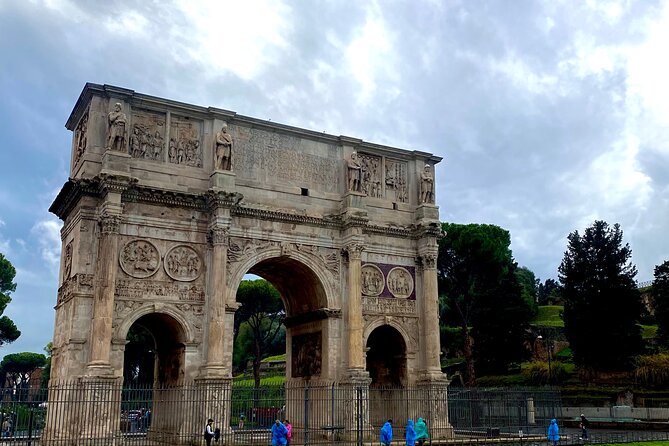
Also, the meeting point is at Arch of Constantine, Piazza del Colosseo, 00184 Roma RM. The group is capped at 12 travelers, which is a good sign for avoiding overcrowding and keeping track of people.
One more practical tip: arrive a little early so you’re not trying to solve phone and ticket issues while stressed. A few people have had trouble locating a host at the meeting spot, and crowd density near the monument can make it harder than it should be.
When This Experience Can Go Wrong (and How to Reduce the Odds)
This doesn’t look like a perfect operation every single day. The main complaints cluster around three things: last-minute cancellations or disruptions, difficulty finding the host at the meeting point, and audio/app issues.
So here’s how I’d protect your day using only common-sense travel prep that this kind of setup demands:
- Plan your schedule with a buffer after the experience, so a delay doesn’t wreck the rest of your day.
- Have your phone fully charged before you arrive, since the audio guide is on your device.
- Make sure you’re ready to use the guide tech right away, and don’t count on vague directions.
- Bring your ID/passport and confirm your names match exactly.
If you’ve got very tight timing—like a follow-up appointment right after—this is the kind of attraction where you want slack. Even when you have reserved entry, real-world Rome can still surprise you with crowds, changes, or setup problems.
Who Should Book This Colosseum and Ancient Rome Access?
This is a great fit if you:
- Want skip-the-line entry and less time stuck in ticket lines.
- Like exploring at your own pace, guided by audio rather than a constant human narration.
- Prefer a host to help you get oriented, but you don’t need a full walking tour for every step.
- Are traveling with kids who can enjoy short bursts of facts (and appreciate a guide who can spark curiosity).
It may be less ideal if you:
- Need a fully guided experience in every section, with no independence required.
- Hate using apps or worry about cellular coverage.
- Specifically want arena floor or underground access, since it’s not included here.
Should You Book It? My Decision Guide
I’d book this experience if your priority is the Colosseum complex with the least friction. Reserved entry plus phone audio plus map support is a practical combo, especially if you want freedom to slow down at Forum and Palatine Hill.
I’d skip or look for a different option if arena floor/underground is the main item on your Roman bucket list, or if you know you’ll be frustrated by phone-based audio tech. Also, if you’re the type who needs a guide to be physically present nonstop, treat this as a hybrid: host help up front, self-guided exploration afterward.
If you do book, your success depends on prep: bring the right ID, match your names exactly, and show up early enough to find the host without stress.
FAQ
What’s included in the tour price?
You get an audio guide, a site map, host assistance at the meeting point, access to selected areas of Ancient Rome, and your Colosseum entrance ticket plus the Colosseum reservation fee.
Do I need a smartphone for the audio guide?
Yes. The audio guide is provided for use on your own phone, and device and headphones are not included.
Is arena floor or underground access included?
No. Arena Floor and Underground access are not included.
How long does the experience take?
It’s approximately 2 to 3 hours, with about 1 hour each at the Colosseum, Roman Forum, and Palatine Hill.
Where do I meet the host?
The meeting point is at Arch of Constantine, Piazza del Colosseo, 00184 Roma RM, Italy. The activity ends back at the meeting point.
Do I need to bring ID or a passport?
Yes. Each traveler must present a valid passport or ID document that matches the name provided at booking for successful entry.
How many people are in the group?
The tour has a maximum group size of 12 travelers.
More Tour Reviews in Rome
- Vatican Museums, Sistine Chapel & St. Peter’s Basilica Tour
★ 4.3 · 73,970 reviews - Vatican Museums, Sistine Chapel & St Peter’s Basilica Guided Tour
★ 4.5 · 39,149 reviews - Rome: Colosseum, Palatine Hill and Roman Forum Guided Tour
★ 4.8 · 32,814 reviews - Rome: Guided Tour of Colosseum, Roman Forum & Palatine Hill
★ 4.7 · 27,897 reviews - Rome: Colosseum & Forum with Audio Guide App -Optional Arena
★ 4.2 · 24,770 reviews - Rome: Colosseum, Roman Forum and Palatine Hill Guided Tour
★ 4.5 · 23,903 reviews
Ancient Rome, Kept Going
- Rome: Colosseum, Palatine Hill and Roman Forum Guided Tour
★ 4.8 · 32,814 reviews - Rome: Guided Tour of Colosseum, Roman Forum & Palatine Hill
★ 4.7 · 27,897 reviews - Rome: Colosseum & Forum with Audio Guide App -Optional Arena
★ 4.2 · 24,770 reviews - Rome: Colosseum, Roman Forum and Palatine Hill Guided Tour
★ 4.5 · 23,903 reviews - Rome: Colosseum Arena Floor, Palatine & Forum Guided Tour
★ 4.5 · 20,180 reviews - Rome: Colosseum Arena, Palatine Hill & Forum Guided Tour
★ 4.7 · 14,510 reviews
Just added to our Rome reviews





Colosseum & Ancient Rome Tours, compared.
 ★ 4.8Colosseum, Palatine Hill and Roman Forum Guided TourFrom $5232,814 reviews
 ★ 4.7Guided Tour of Colosseum, Roman Forum & Palatine HillFrom $5527,897 reviews
 ★ 4.2Colosseum & Forum with Audio Guide App -Optional ArenaFrom $4124,770 reviews
 ★ 4.5Colosseum, Roman Forum and Palatine Hill Guided TourFrom $5923,903 reviews
 ★ 4.5Colosseum Arena Floor, Palatine & Forum Guided TourFrom $4120,180 reviews
 ★ 4.7Colosseum Arena, Palatine Hill & Forum Guided TourFrom $8414,510 reviews
 ★ 4.6Colosseum,Forum & Palatine Tour + Optional Arena FloorFrom $4513,169 reviews
 ★ 4.7Colosseum: Underground and Ancient Rome TourFrom $16012,691 reviews