
Reviewed · ROME
Celebrate Ancient Jubilee in Rome in the 4 Papal Basilicas
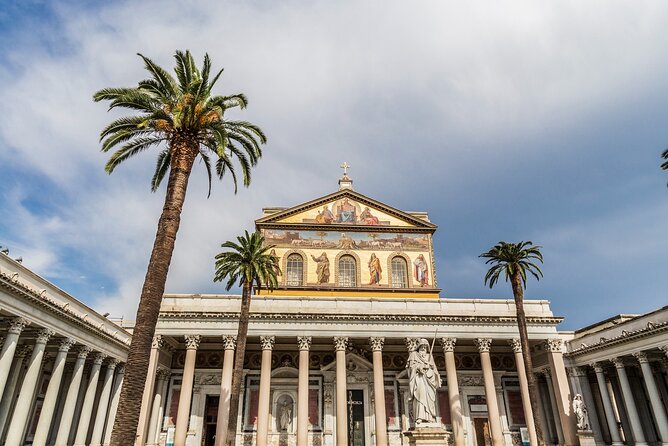
Four Holy Doors, one Roman day. This 5-hour tour is built for the 2025 Rome Jubilee, taking you to all four papal basilicas where the Holy Doors are opened for the occasion, with an expert guide who points out the details most people miss. I love the focused, guided pace inside the churches, especially the way the tour ties together major relics and standout art like Michelangelo’s Pietà and the story of St. Paul’s chains. I also like the small group size, capped at 12, which keeps the day from feeling like you’re just being herded through marble.
One thing to plan for: there’s a lot of walking and moving between churches, and the tour is not recommended for travelers with mobility difficulties.
In This Review
- Key things I’d plan around
- Why the 2025 Jubilee Holy Doors are worth planning
- Getting from basilica to basilica without burning the day
- Stop 1: St. Peter’s Basilica, Michelangelo’s Pietà, and St. Peter’s burial place
- Stop 2: San Paolo Fuori le Mura and St. Paul’s chains
- Stop 3: Archbasilica of St. John Lateran, mosaics, and Peter and Paul above the altar
- Stop 4: Santa Maria Maggiore, golden interior, and the Salus Populi Romani icon
- Guides matter: Daniel and Paul’s teaching style
- Price and value: why $300.38 can make sense for four basilicas
- Plan your day so the walking feels manageable
- Should you book this Holy Doors tour?
- FAQ
- How long is the tour?
- What does the tour cost?
- How many people are on the tour?
- Is the tour in English?
- Are tickets or admissions included?
- Does the price include food and drink?
- What’s the start and end location?
Key things I’d plan around
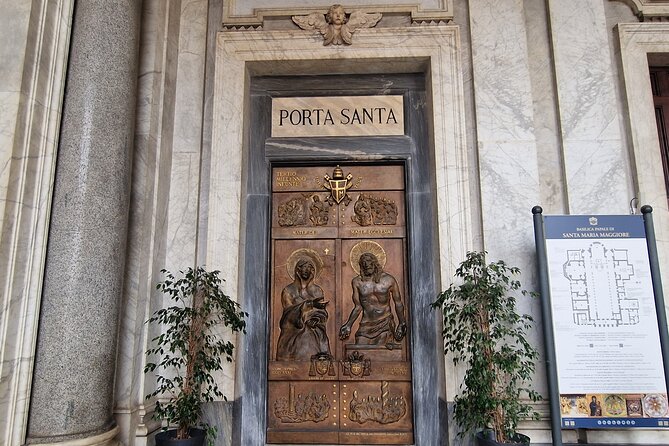
- All four Holy Doors in one outing for the 2025 Jubilee, not just one or two basilicas
- St. Peter’s Basilica highlights including Michelangelo’s Pietà and the tomb spot under the High Altar
- St. Paul outside the Walls with the chains that bound him and a newly excavated sarcophagus
- St. John Lateran’s standing mosaics story plus the heads of Saints Peter and Paul above the altar from 1300
- Santa Maria Maggiore’s golden interior with Salus Populi Romani and relics connected to the Nativity
Why the 2025 Jubilee Holy Doors are worth planning
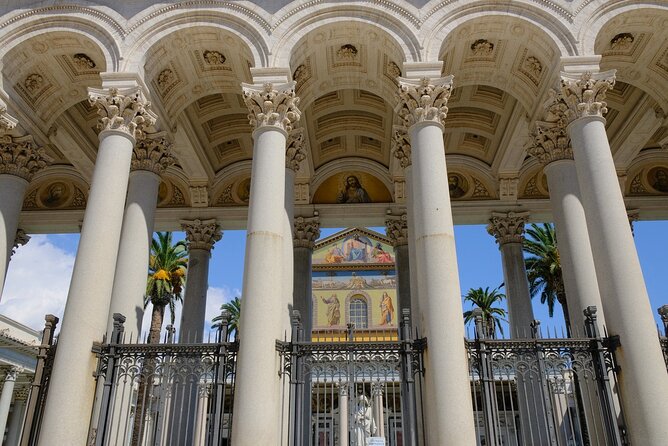
Rome is full of famous churches. What makes this day different is the specific Jubilee focus: you’re set up to celebrate the 2025 Rome Jubilee by visiting the four papal basilicas and seeing the Holy Doors opened for the event. If you’re Catholic, or you just like history that has living religious meaning, this is a rare chance to connect the symbolism to the actual places.
Even if you’ve toured Rome’s big churches before, Jubilee days tend to change the feeling. You’re not just looking at monuments. You’re following a guided pilgrimage-style route with the churches presented as a connected whole, not four separate quick stops.
Weighing this one up? Here is how a few Rome favourites compare:
- Vatican Museums, Sistine Chapel & St. Peter’s Basilica Tour
★ 4.3 · 73,970 reviews - Vatican Museums, Sistine Chapel & St Peter’s Basilica Guided Tour
★ 4.5 · 39,149 reviews - Rome: Colosseum, Palatine Hill and Roman Forum Guided Tour
★ 4.8 · 32,814 reviews - Rome: Guided Tour of Colosseum, Roman Forum & Palatine Hill
★ 4.7 · 27,897 reviews
Getting from basilica to basilica without burning the day
This tour runs about 5 hours total. It also includes an air-conditioned vehicle, which matters because the time between basilicas is part of your day, not just the time inside the churches.
You’ll start at Fontana di Piazza Giovanni XXIII, Lungotevere Vaticano (00193 Roma) and end in the piazza in front of Santa Maria Maggiore at P.za di Santa Maria Maggiore, 00100 Roma. The route is straightforward, but you should still expect walking inside and between stops. In past experiences, the biggest “friction point” has been finding the guide at the meeting point quickly, so arrive a bit early and have your phone ready.
One more practical note: food and drink are not included. So treat this like a focused sightseeing block. Plan to eat before or after, not during.
Stop 1: St. Peter’s Basilica, Michelangelo’s Pietà, and St. Peter’s burial place
At the Vatican, you’ll enter St. Peter’s Basilica, built over the site where St. Peter’s body is said to be buried. This is one of those places where scale can be dizzying, so a guide really helps you aim your attention instead of wandering until your feet and brain both tap out.
Inside, your expert Catholic guide gives you a tour of the basilica’s interior, including:
- Michelangelo’s Pietà
- relics and altars connected to major saints
- the history tied to the basilica’s layout
- the fact that St. Peter is buried underneath the High Altar
If you love art, this is the “wow” stop. If you’re more into religious history, it’s also the one where the guide can connect what you’re seeing to why it matters. Either way, plan on taking your time with the guide’s pointers. This isn’t a museum scan; it’s a guided look at key works and key meanings.
Stop 2: San Paolo Fuori le Mura and St. Paul’s chains
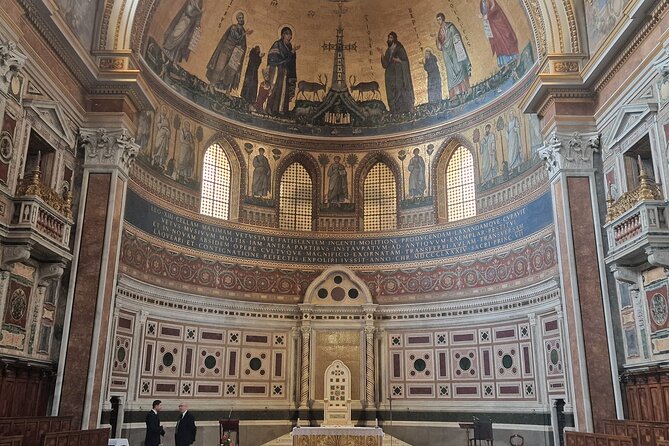
Next is Basilica Papale di San Paolo Fuori le Mura. This is where the remains of St. Paul are housed in Rome. The stop is built around the story of his captivity: pilgrims will see the chains that bound St. Paul during his incarceration and house arrest in Rome.
A standout detail here is the mention of a newly excavated sarcophagus, which adds a “fresh eyes” feeling to an ancient site. After that, you’ll tour the rest of the ancient Theodosian Basilica.
What I like about this stop is that it’s not only about the “big name” saint. It’s about a specific object (the chains) and then a wider look at the basilica that contains them. If you enjoy tours where the guide uses objects as anchors, you’ll probably enjoy this one a lot.
Stop 3: Archbasilica of St. John Lateran, mosaics, and Peter and Paul above the altar
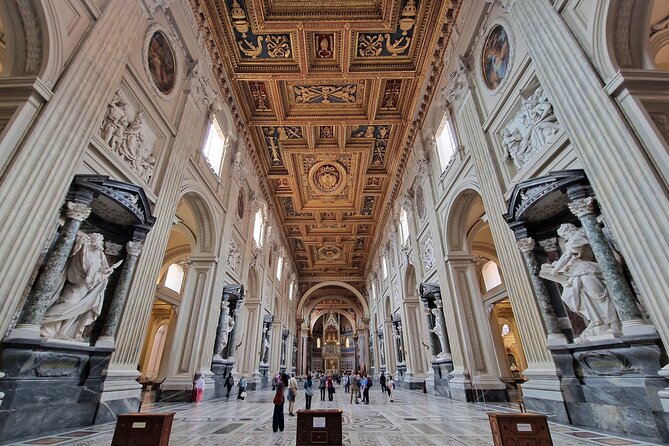
Your third stop is Arcibasilica di San Giovanni in Laterano, the Cathedral of Rome. This is a powerful church to visit because it’s presented as the spiritual and historical center, not just a famous building.
Inside, your guide focuses on:
- the interior and its history
- the story of ancient mosaics
- and the heads of Saints Peter & Paul, which were brought into the basilica and placed above the altar in 1300
If you’re the kind of traveler who likes to understand why a place is arranged the way it is, this stop has that built in. The mosaics are the kind of feature that can be missed if you’re trying to take in everything at once, so having a guide direct your attention makes a real difference.
Stop 4: Santa Maria Maggiore, golden interior, and the Salus Populi Romani icon
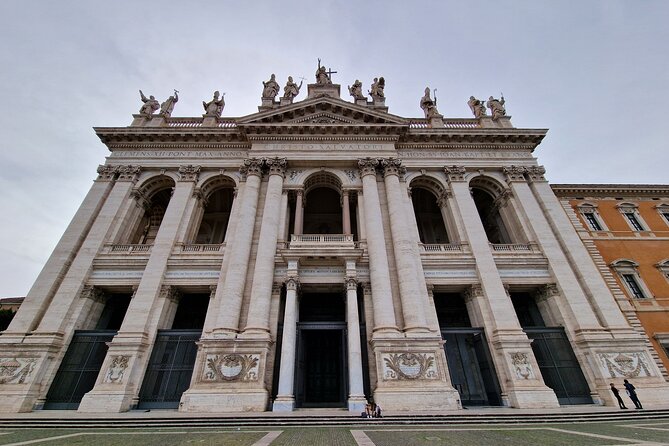
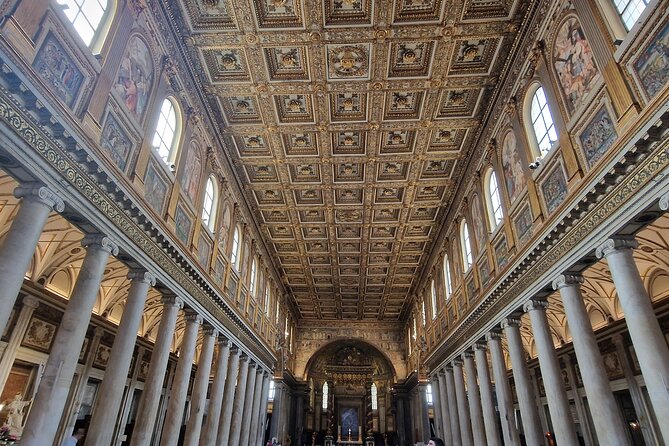
The final basilica is Santa Maria Maggiore (St Mary Major). The tour frames it as perhaps the oldest church dedicated to Mary in Rome, and certainly one of the most important. It’s also the stop where the description leans hard into interior artistry.
Your guide will help you appreciate:
- the golden interior
- features connected to different popes buried there
- relics tied to the crib of the Nativity of Christ
- the miraculous icon Salus Populi Romani
- and other stunning church elements
This is often the stop where travelers slow down without realizing it. It’s not just “pretty.” It’s a detailed church interior with lots of items and stories layered together. If you’ve only ever seen pictures, you’ll likely find this one hits harder in person.
Guides matter: Daniel and Paul’s teaching style
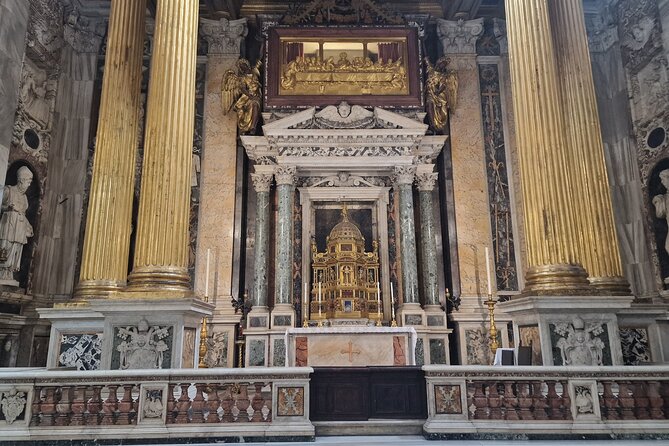
A big part of why this tour earns high marks is the guide experience. In the feedback you shared, Daniel gets praised for being a wealth of information, and Paul gets especially strong mentions for depth and clarity, plus an ability to answer questions and tailor topics within the small group.
Here’s what that means for you:
- You’ll get more than a basic “what you’re looking at” walkthrough.
- Guides are able to explain both the religious and historical/art angles in a way that laypeople can follow.
- If you care about specific details like St. Paul’s chains or the Pietà, the guide’s emphasis can make those moments feel personal and specific rather than generic.
One fair consideration: the balance between Jubilee/Holy Door context and art history can vary by guide. If Jubilee-focused explanation is your top priority, be ready to ask your guide what you want to understand most as the day unfolds.
Price and value: why $300.38 can make sense for four basilicas
The price is $300.38 per person for an about 5-hour tour. That’s not a bargain price for Rome, but the value comes from what’s included and how many major sites you cover in one go.
Here’s what you’re getting for your money:
- an air-conditioned vehicle
- an expert professional guide
- admission listed as free/ticket-free for the basilica visits on the tour
And you’re covering four of the most significant churches in Rome in one organized block, including major items like St. Peter’s tomb area focus, St. Paul’s chains, Lateran’s mosaics and the heads of Peter and Paul from 1300, and Santa Maria Maggiore’s Salus Populi Romani.
You’ll still need to handle your own food and drink, but if you hate wasting half a day trying to coordinate transport and entry timing between sites, this kind of guided package can feel like a time-saver.
Finally, the average booking window is 61 days in advance. If your travel dates line up with Jubilee schedules, it’s smart to plan early rather than wing it.
Plan your day so the walking feels manageable
This tour isn’t marketed for slow, low-mobility days. It’s not recommended for travelers with mobility difficulties, and the route requires moving between four basilicas plus interior walking.
If mobility might be an issue, do this part the smart way:
- Contact the provider before you go and explain your needs.
- The information you shared indicates the van can accommodate a wheelchair if you let them know in advance, so don’t assume you’ll be able to handle it last-minute.
What to wear and pack depends on you, but the core rule is simple: comfortable shoes. This is a pilgrimage-style circuit, not a “sit down and wait” museum hop.
Should you book this Holy Doors tour?
Book it if you want a guided, Jubilee-centered way to see Rome’s four papal basilicas in a single outing, including the Holy Doors. It’s also a strong choice if you like detailed explanations tied to specific items—like Michelangelo’s Pietà, St. Paul’s chains, the 1300 Lateran altar placement, and Salus Populi Romani—rather than vague big-picture sightseeing.
Consider another option if mobility is a concern, because the day involves real walking and the tour is explicitly not recommended for mobility difficulties. Also think twice if you’re expecting the guide to focus only on Jubilee/Holy Doors; the tour blends spiritual and cultural commentary, and the emphasis can shift depending on the guide.
If you’re ready for a concentrated Rome church day with a small group and clear guidance, this is the kind of tour that makes the Holy Doors feel like part of a story, not just a photo stop.
FAQ
How long is the tour?
It runs for about 5 hours.
What does the tour cost?
The price is $300.38 per person.
How many people are on the tour?
The group size is capped at a maximum of 12 travelers.
Is the tour in English?
Yes, it is offered in English.
Are tickets or admissions included?
Admission is listed as free/ticket-free for the basilicas on the tour, including St. Peter’s Basilica.
Does the price include food and drink?
No. Food and drink are not included.
What’s the start and end location?
It starts at Fontana di Piazza Giovanni XXIII, Lungotevere Vaticano, 00193 Roma, and ends in the piazza in front of Santa Maria Maggiore (P.za di Santa Maria Maggiore, 00100 Roma).
More Tour Reviews in Rome
- Vatican Museums, Sistine Chapel & St. Peter’s Basilica Tour
★ 4.3 · 73,970 reviews - Vatican Museums, Sistine Chapel & St Peter’s Basilica Guided Tour
★ 4.5 · 39,149 reviews - Rome: Colosseum, Palatine Hill and Roman Forum Guided Tour
★ 4.8 · 32,814 reviews - Rome: Guided Tour of Colosseum, Roman Forum & Palatine Hill
★ 4.7 · 27,897 reviews - Rome: Colosseum & Forum with Audio Guide App -Optional Arena
★ 4.2 · 24,770 reviews - Rome: Colosseum, Roman Forum and Palatine Hill Guided Tour
★ 4.5 · 23,903 reviews




