
Reviewed · PANTHEON TOURS
Caravaggio Art Walking Tour of Rome with Pantheon Visit
Caravaggio in Rome has a pulse. This 3-hour, small-group art walk strings together the best places to see Caravaggio’s work in church settings, then caps it with an interior visit to the Pantheon. I like that it’s not just a museum-style lecture; you walk, you stop, and you see the paintings where they were meant to live.
Two things I especially like: you get to see Caravaggio masterpieces in their actual churches (at Santa Maria del Popolo and Sant’Agostino), and the tour includes an aperitivo at a local wine bar to keep the energy up as the afternoon turns into evening.
One drawback to plan for: it’s a walking tour with a fair amount of time on your feet, and late-day rain can make the outdoor stretches less fun. Keep a compact umbrella handy and wear shoes you’d happily do a city day in.
In This Review
- Key moments that make this tour work
- A 4:00 pm start is smart for Rome’s art stops
- Meeting near Piazza del Popolo: get your bearings fast
- Stop 1: Santa Maria del Popolo and two Caravaggio masterpieces
- Stop 2: Campo Marzio, Via Ripetta, and street-life inspiration
- Stop 3: Santa Maria della Pace and Raphael’s ceiling drama
- Stop 4: Sant’Agostino, Raphael nearby, and Caravaggio’s Madonna del Loreto
- Walking via Via Condotti and Via Marguttam to the Spanish Steps
- Stop 5: Pantheon interior visit—architecture and the tombs of kings
- Aperitivo included: how to keep the momentum after the tour
- Group size, headsets, and guide style (Giuseppe, Maria, Jeanette)
- Price and value: what $65.17 buys you in real time
- Who should book this Caravaggio + Pantheon walk
- Should you book this tour?
- FAQ
- Where does the tour start?
- What time does it start?
- How long is the tour?
- What sights will we visit?
- Is the Pantheon entrance included?
- What’s included in the price?
- Is hotel pickup or drop-off included?
- Is there luggage storage?
Key moments that make this tour work
- Caravaggio in situ at Santa Maria del Popolo, including Crucifixion of St. Peter and Conversion on the Way to Damascus
- Sant’Agostino + Cavaletti Chapel, where Caravaggio’s Madonna del Loreto is housed, alongside Raphael’s work in the same church
- Spanish Steps photo stop while you walk through classic Rome streets like Via Condotti and Via Marguttam
- Headsets included, so you can hear your guide inside quieter churches without craning your neck
- Pantheon interior visit with context on the building’s pagan-to-Christian transformation and the tombs of Italy’s first kings
- Included aperitivo, which turns the tour into a half-day plan instead of a quick stop-and-go checklist
A 4:00 pm start is smart for Rome’s art stops
Starting at 4:00 pm is a sneaky good choice. Rome’s daytime crowds are still there, but late afternoon usually feels calmer, and the streets around the historic center start to shift into evening rhythm. That matters, because this tour is as much about moving through Rome as it is about the paintings.
Also, you’ll be indoors multiple times—churches with real seating gaps, uneven floors, and moments where standing still for a while is part of the experience. Headsets are included, which makes it easier to follow along when you’re surrounded by echoes and marble.
This is a tour built for people who like context. You’ll hear not only what you’re looking at, but why Caravaggio painted the way he did while living in Rome in the late 1500s—his stubborn independence, the trouble that followed him, and the realism that made his work feel intense even in a quiet chapel.
The Pantheon, a couple more takes
- Rome: Pantheon Priority Entry Ticket & Interactive App
★ 4.1 · 5,114 reviews - Rome: Pantheon Priority Entry Tickets with Interactive App
★ 4.6 · 4,108 reviews - Rome: Pantheon Timeless Marvel Guided Tour with Entry Ticket
★ 4.9 · 4,002 reviews - Castel Sant’Angelo: Ticket with optional Vatican or Pantheon
★ 4.4 · 3,088 reviews
Meeting near Piazza del Popolo: get your bearings fast
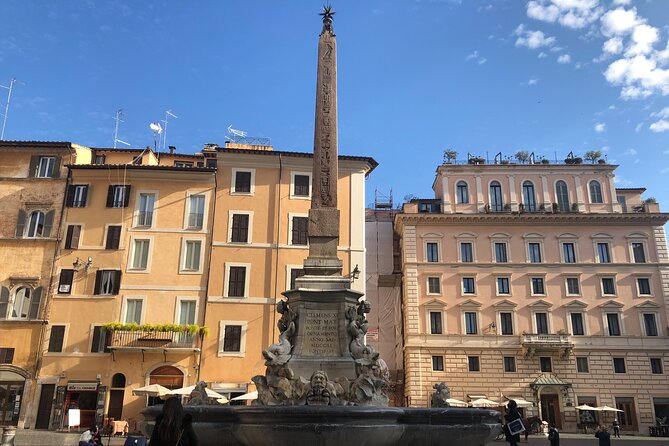
You meet near Piazza del Popolo (with the listed start point at Piazzale Flaminio, close by) and begin in front of Santa Maria del Popolo. It’s one of Rome’s liveliest squares, which helps because your guide can set the stage before you slip into smaller streets.
From the start, expect a guided flow that feels like a carefully paced walk: short museum-like stops, then back to street-level Rome. The tour keeps you moving along notable areas in the center, including the Campo Marzio district and classic photo corridors near the Spanish Steps.
You don’t need a car or hotel pickup for this. The tour is near public transportation, and you’ll be on a “follow the guide” schedule rather than hunting for entrances on your own.
Stop 1: Santa Maria del Popolo and two Caravaggio masterpieces
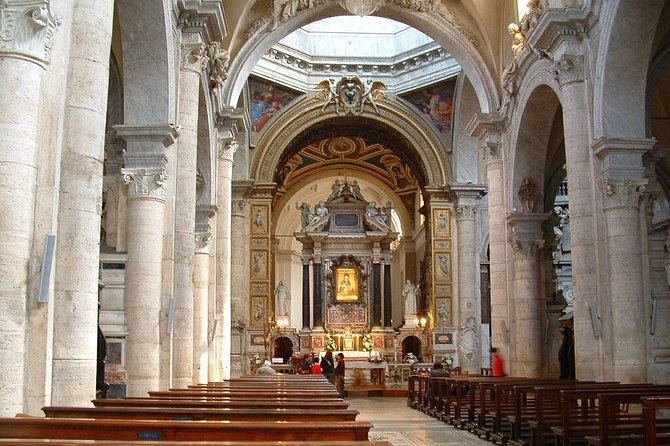
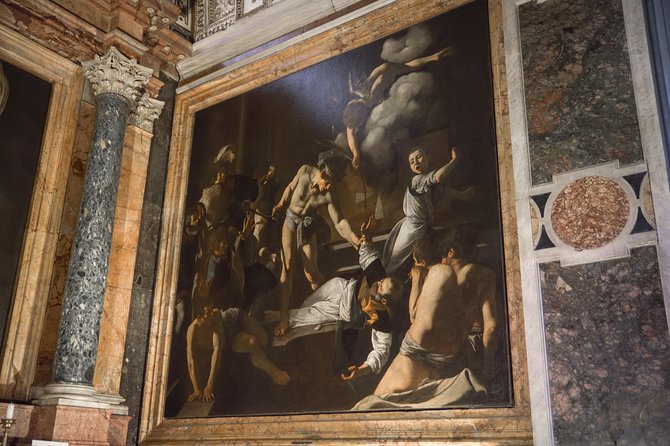
At Chiesa di Santa Maria del Popolo, you step inside to see two major Caravaggio paintings: Crucifixion of St. Peter and Conversion on the Way to Damascus. This is the kind of stop that pays off because it’s Caravaggio at full force, but still in a setting that matches the work’s spiritual and dramatic tone.
You also get architectural and artistic context up top. The church is topped by a dome designed and frescoed by Raphael, so even before you focus on Caravaggio’s figures, you’re reminded that Rome’s baroque world was shaped by older Renaissance power. It’s a useful contrast: the city’s art isn’t one style forever—it’s layers, and your guide helps connect them.
Practical note: your time here is about 45 minutes, and it’s the first major “anchor” stop. Pace yourself. If you rush, you’ll miss what makes Caravaggio special—how lighting, gesture, and emotion work together rather than acting like separate facts.
Stop 2: Campo Marzio, Via Ripetta, and street-life inspiration
After Santa Maria del Popolo, the walk shifts toward the Campo Marzio district, including a stretch along Via Ripetta. This leg is lighter on big interiors and heavier on the kind of storytelling you only get on a walking tour.
Your guide connects Caravaggio to what was happening on the street, including the area’s reputation and the idea that he drew inspiration from the people and scenes around him—right down to the street life near Via Ripetta, which the tour highlights in relation to courtesans and the bustling Rome around late 1500s Caravaggio.
This is a valuable stop even if you don’t care about street history for its own sake. Knowing the urban backdrop changes how you look at Caravaggio’s emotional intensity. You stop treating his paintings like isolated masterpieces and start seeing them as responses to a real, human world.
Worth a look next to this Rome booking:

Stop 3: Santa Maria della Pace and Raphael’s ceiling drama
Next is Chiesa di Santa Maria della Pace, where you get about 30 minutes and a mix of beauty and surprise. You’ll look at a Raphael fresco of Sybil’s dance and pay attention to the ceiling details and angels.
This is a smart breather in the route. After processing the intensity of Caravaggio, you get a different kind of visual language—graceful movement, theatrical ceiling work, and a calmer rhythm for your eyes. It helps you compare how Renaissance and baroque artists used composition and divine symbolism.
If you like to photograph, this is also the kind of church where you’ll want to pause before the crowd rushes in and out. Take a slow look, then check your angle again. In churches, your best shot is often the one you get after you’ve actually looked at the painting first.
Stop 4: Sant’Agostino, Raphael nearby, and Caravaggio’s Madonna del Loreto
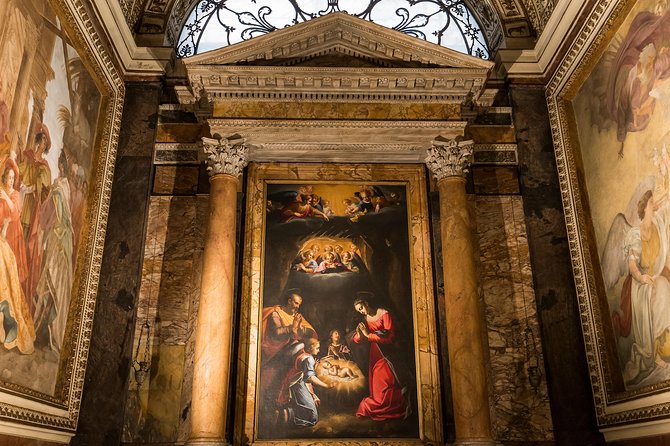
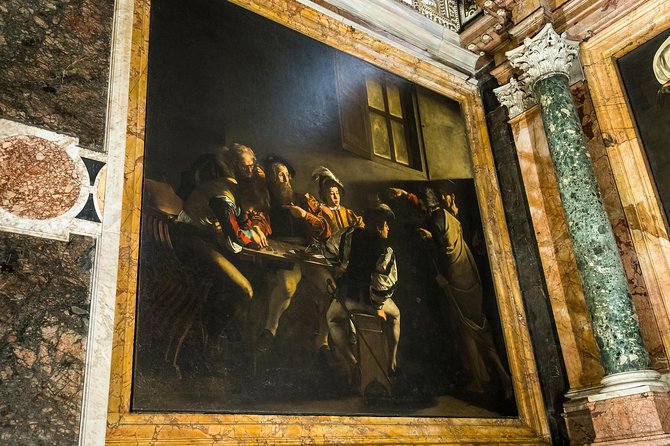
The heart of the tour keeps pulling you back into church spaces, and Sant’Agostino is another big moment. You go inside and admire work by Raphael as well as Caravaggio’s Madonna del Loreto in the Cavaletti Chapel.
Your guide also uses this stop to explain Caravaggio’s personal side: his non-conformist streak, how that fed conflict, and why his life in Rome came with real consequences, not just artistic success. It’s the kind of context that makes the paintings feel less like famous names and more like outcomes of a complicated person.
This segment also connects to the wider Caravaggio scene in nearby churches—your route references San Luigi dei Francesi, where the San Matteo paintings are kept. Even if you’re not focused on every artwork in that church during this exact time block, you’ll leave knowing that Rome’s Caravaggio story isn’t confined to one building. It’s a network.
Time here is about 30 minutes, so if you’re the type who likes to read every plaque, you’ll still be okay, but don’t plan on disappearing into the side chapels. Let the guide lead you to the key points.
Walking via Via Condotti and Via Marguttam to the Spanish Steps
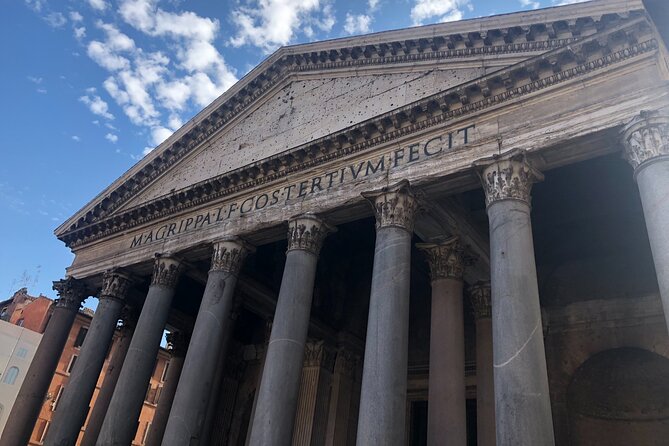
Between churches, you’ll pass along well-known streets like Via Condotti and Via Marguttam, with a stop for Spanish Steps photos. It’s not just for postcard pictures—it’s a quick way to connect “big-name Rome sights” to the smaller church interiors you’re heading into next.
This is also a good stretch for pacing. The stops are meaningful, but you’ll also need movement to keep your legs from locking up. That said, it’s still a walking tour, so if you’re sensitive to distance, plan your day to keep the rest of your itinerary light after the tour.
Stop 5: Pantheon interior visit—architecture and the tombs of kings
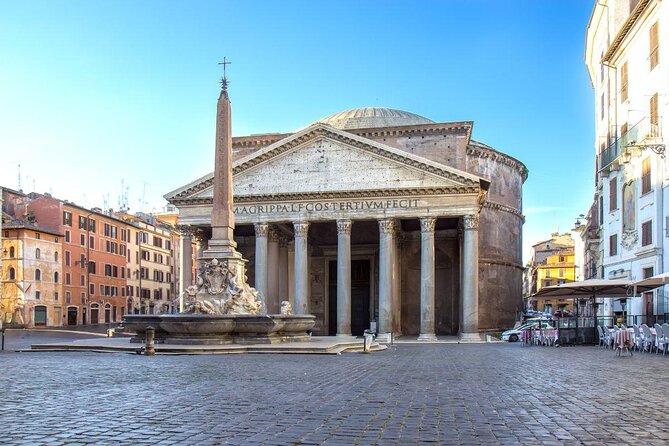
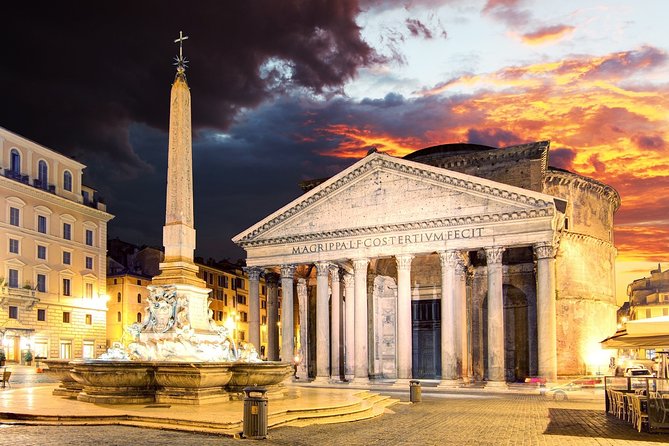
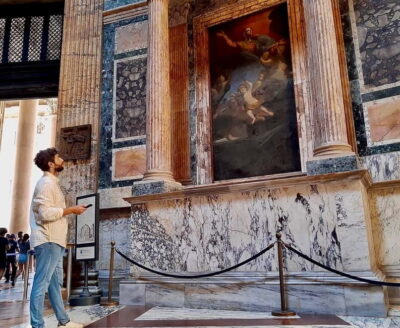
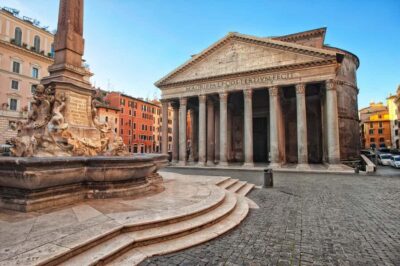
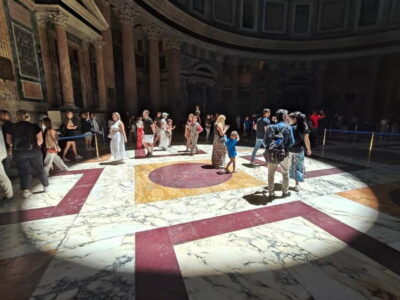
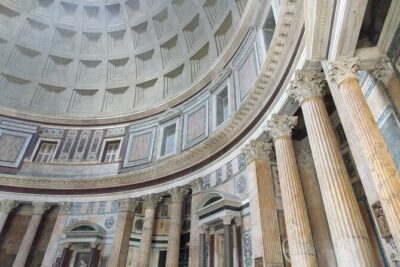
The last stop is the Pantheon, and the interior visit is included. This building is famous for its structure, and your guide focuses on why it matters: it was the first pagan temple converted to Christianity, which gave the city an architectural survival story as well as a spiritual one.
The Pantheon also includes tombs tied to the story of modern Italy. You’ll learn about the tombs of the first two kings of Italy, placed there after the unification in 1861. And yes, Raphael is connected here too, with his tomb at this site.
This part of the tour is where the art discussion turns broader. Caravaggio lived in a Rome that still had layers of older identity. Seeing the Pantheon afterward helps you understand why Rome’s artists weren’t working in a blank space—they were working inside an environment packed with past power, past rituals, and past aesthetics.
Plan about 30 minutes here. That’s long enough to see the main space, soak in the scale, and understand what you’re looking at without needing an entire day.
Aperitivo included: how to keep the momentum after the tour
One of the best “value moves” in this experience is the included aperitivo at a local wine bar. Instead of ending in a lonely plaza, you get a practical payoff: something to drink and a small bite to reset you before you tackle dinner.
Reviews and extra notes around this tour often point to a place like Casa Coppelle/Casa Coppella for the post-walk food vibe. It’s a good clue that the aperitivo isn’t treated like a random add-on. It’s meant to feel like a real break in your day, not a quick sip and out the door.
If you’re planning your evening, I suggest keeping dinner flexible. With aperitivo included, you can usually eat later without feeling like you must cram a full meal right away. And if you still want more, it’s an easy transition from baroque churches to classic Roman evening life.
Group size, headsets, and guide style (Giuseppe, Maria, Jeanette)
This tour is capped at 15 travelers, and that small size is a big deal. You’ll get more back-and-forth questions, and your guide can keep the pace under control inside busy churches. It also helps that this tour provides headsets, which makes the experience feel smoother in quieter interiors.
Guide names mentioned in connection with this route include Giuseppe, Maria, and Jeanette—and what they have in common is a storytelling approach that links the art to Roman society. That’s exactly what you want for Caravaggio, because his work doesn’t always feel “polite” at first glance. Context turns that discomfort into understanding.
If you’re not an art-history person, you’re still in the right place. The tour is designed to put the paintings into human terms: the drama, the motives, and the era.
Price and value: what $65.17 buys you in real time
At $65.17 per person for about 3 hours, the value comes from what’s bundled, not just the brand-name sights. You’re paying for:
- an expert local guide
- headsets
- Pantheon interior admission
- and an included aperitivo
That’s a strong mix for Rome, where church and site time adds up fast when you book everything separately. Plus, the tour does something many “cheap tours” skip: it focuses on fewer stops, with enough time to actually look at art instead of sprinting past it.
You’ll still want to budget for anything beyond aperitivo, like your later meal or any snacks, but the essentials are covered. Also note: hotel pickup and drop-off are not included, so you’re responsible for getting yourself to the meeting area.
Who should book this Caravaggio + Pantheon walk
Book it if you want baroque art with context and you like walking Rome’s center without needing to plan every turn. This tour works well for:
- people who love Caravaggio and want to see his work in the churches that house it
- travelers who also enjoy Raphael (he shows up in key ways on this route)
- anyone who wants a half-day plan that includes food and a major architecture finale at the Pantheon
Consider skipping or pairing it with easier plans if you have limited mobility or hate walking. Reviews also point out that weather can affect the outdoor stretches, so if you’re traveling in the rainy season, pack for it and don’t rely on perfect conditions.
Also, if you’re the kind of visitor who wants long, quiet solo time inside monuments, you may find the pacing faster than you prefer. This is guide-led, not slow wandering.
Should you book this tour?
Yes—if your goal is a smart, concentrated Caravaggio experience plus a Pantheon interior visit, this is a very solid bet. The stops are chosen for meaning: Caravaggio where you can see him as baroque drama, not just as an image on a screen, and then the Pantheon where architecture ties the city’s layers together.
I’d especially recommend it if you like your art with a human story attached. When the guide talks about Rome’s street life, Caravaggio’s temperament, and why the paintings sit in these specific churches, the art stops being distant. You start seeing the world the paintings came from.
Just go in with realistic expectations: you’ll walk, churches take time, and late-day weather can throw a curveball. Bring good shoes, pack a small umbrella, and you’ll get a memorable half-day.
FAQ
Where does the tour start?
The start point is Piazzale Flaminio, Roma RM, Italy, and the tour begins near Piazza del Popolo.
What time does it start?
It starts at 4:00 pm.
How long is the tour?
The duration is about 3 hours.
What sights will we visit?
You’ll visit Chiesa di Santa Maria del Popolo, areas around Campo Marzio (including Via Ripetta), Chiesa di Santa Maria della Pace, Sant’Agostino, and the Pantheon.
Is the Pantheon entrance included?
Yes. The Pantheon interior visit is included.
What’s included in the price?
The included items are an expert local guide, headsets, the Pantheon internal visit, and an aperitivo.
Is hotel pickup or drop-off included?
No, hotel pickup and drop-off are not included.
Is there luggage storage?
No, luggage storage is not available.
More Tours in Rome
- Vatican Museums, Sistine Chapel & St. Peter’s Basilica Tour
★ 4.3 · 73,970 reviews - Vatican Museums, Sistine Chapel & St Peter’s Basilica Guided Tour
★ 4.5 · 39,149 reviews - Rome: Colosseum, Palatine Hill and Roman Forum Guided Tour
★ 4.8 · 32,814 reviews - Rome: Guided Tour of Colosseum, Roman Forum & Palatine Hill
★ 4.7 · 27,897 reviews - Rome: Colosseum, Roman Forum and Palatine Hill Guided Tour
★ 4.5 · 23,903 reviews - Rome: Colosseum Arena Floor, Palatine & Forum Guided Tour
★ 4.5 · 20,180 reviews
More Tour Reviews in Rome
- Vatican Museums, Sistine Chapel & St. Peter’s Basilica Tour
★ 4.3 · 73,970 reviews - Vatican Museums, Sistine Chapel & St Peter’s Basilica Guided Tour
★ 4.5 · 39,149 reviews - Rome: Colosseum, Palatine Hill and Roman Forum Guided Tour
★ 4.8 · 32,814 reviews - Rome: Guided Tour of Colosseum, Roman Forum & Palatine Hill
★ 4.7 · 27,897 reviews - Rome: Colosseum & Forum with Audio Guide App -Optional Arena
★ 4.2 · 24,770 reviews - Rome: Colosseum, Roman Forum and Palatine Hill Guided Tour
★ 4.5 · 23,903 reviews
Back to the Pantheon
- Rome: Pantheon Priority Entry Ticket & Interactive App
★ 4.1 · 5,114 reviews - Rome: Pantheon Priority Entry Tickets with Interactive App
★ 4.6 · 4,108 reviews - Rome: Pantheon Timeless Marvel Guided Tour with Entry Ticket
★ 4.9 · 4,002 reviews - Castel Sant’Angelo: Ticket with optional Vatican or Pantheon
★ 4.4 · 3,088 reviews - Pantheon Elite Guided Tour – Rome’s Iconic Ancient Temple
★ 5.0 · 1,447 reviews - Rome: Pantheon Small-Group Guided Tour with Entry Ticket
★ 4.9 · 1,226 reviews
Just added to our Rome reviews





Pantheon Tours, compared.
 ★ 4.1Pantheon Priority Entry Ticket & Interactive AppFrom $145,114 reviews
 ★ 4.6Pantheon Priority Entry Tickets with Interactive AppFrom $54,108 reviews
 ★ 4.9Pantheon Timeless Marvel Guided Tour with Entry TicketFrom $214,002 reviews
 ★ 4.4Castel Sant’Angelo: Ticket with optional Vatican or PantheonFrom $183,088 reviews
 ★ 5.0Pantheon Elite Guided Tour – Rome’s Iconic Ancient TempleFrom $411,447 reviews
 ★ 4.9Pantheon Small-Group Guided Tour with Entry TicketFrom $511,226 reviews
 ★ 4.0Rome’s Iconic Temple: Pantheon Audio Guided Tour with Fast AccessFrom $211,188 reviews
 ★ 4.7Pantheon Small Group Tour and Skip-the-Line TicketFrom $531,008 reviews
Browse the lists this tour appears in