
Reviewed · COLOSSEUM & ANCIENT ROME TOURS
Best of Colosseum Experience: Exclusive Tour in 40 Languages
Rome is loud with history.
This is a tight, well-run three-stop tour that strings together the Colosseum, Palatine Hill, and the Roman Forum, with live translation built for mixed-language groups. I like that it’s small enough to feel personal, and I really like the real-time AI translation setup that helps you follow along without stopping your day.
The main thing I’d consider is the pace. Three hours is efficient, but you’ll be moving through big sights fast, so it’s not the slow, wander-at-your-own-speed kind of experience.
In This Review
- Key highlights to know before you go
- A 3-stop ancient Rome sprint: how 3 hours feels
- Where it starts: the Colosseum meeting point and timing that matters
- Entering the Colosseum: gladiators, engineering, and what you’ll actually notice
- Palatine Hill: the origin story view you can feel in your legs
- The Roman Forum: where politics, religion, and speaking mattered
- Live AI translation in 40 languages: the practical way it helps
- Small groups, headsets, and a guide who keeps the thread
- Price and value: when $45.86 makes sense
- Who this tour fits best (and who should choose differently)
- Quick tips so your visit goes smoother
- Should you book Best of Colosseum Experience?
- FAQ
- FAQ
- What locations are included in this tour?
- How long is the tour?
- Is admission included for all three sites?
- Is there a mobile ticket?
- Is real-time translation available, and in how many languages?
- How fast is the AI translation delivered after the guide speaks?
- Do I need my passport or ID?
- Where is the meeting point?
- Do I need to arrive early?
- Is food and drink included?
Key highlights to know before you go
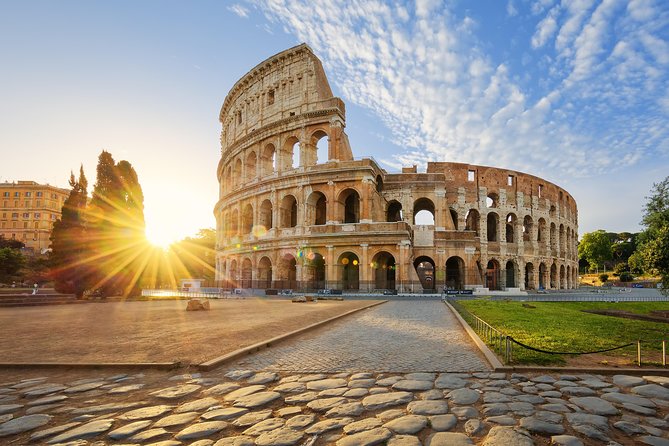
- Three top sites in 3 hours: Colosseum, Palatine Hill, and the Roman Forum, with admission tickets included.
- Live translation in 40 languages: the guide talks naturally, and you get a translated narration in your earphones.
- Small group size (max 25): more interaction than big-bus tours, plus audio headsets if needed.
- Pacing that stays on track: praised guides like Theresa, Elizabeth, and Naomi kept the schedule moving, even in tough weather.
- Passport/ID required for entry: mandatory for Colosseum access, so don’t forget it.
A 3-stop ancient Rome sprint: how 3 hours feels
This tour is built for people with limited time in Rome who still want the big hits. You get three separate areas tied together by a guide who adds meaning to what you’re seeing. It’s not only about “looking at ruins.” It’s about understanding what those ruins were used for, and why certain spots mattered.
The duration is about 3 hours, with roughly one hour at each stop. That’s enough time to get the main story and see the key viewpoints, but it also means you won’t have hours to drift. If you like slow travel and long photo breaks, plan for the fact that you’ll trade some wandering for a packed, efficient route.
Still on ancient Rome? A few more we rated
- Rome: Colosseum, Palatine Hill and Roman Forum Guided Tour
★ 4.8 · 32,814 reviews - Rome: Guided Tour of Colosseum, Roman Forum & Palatine Hill
★ 4.7 · 27,897 reviews - Rome: Colosseum & Forum with Audio Guide App -Optional Arena
★ 4.2 · 24,770 reviews - Rome: Colosseum, Roman Forum and Palatine Hill Guided Tour
★ 4.5 · 23,903 reviews
Where it starts: the Colosseum meeting point and timing that matters
You’ll meet at Piazza del Colosseo, 1a, 00184 Roma RM, Italy. The practical tip here is simple: show up 15 minutes early. The tour won’t wait, and if you miss departure, there’s no refund. Rome runs on timed entry, and this experience leans into that reality.
Also note the ID requirement. You must bring your passport or ID for entry to the Colosseum. That’s not a “nice to have” detail. It’s mandatory for access.
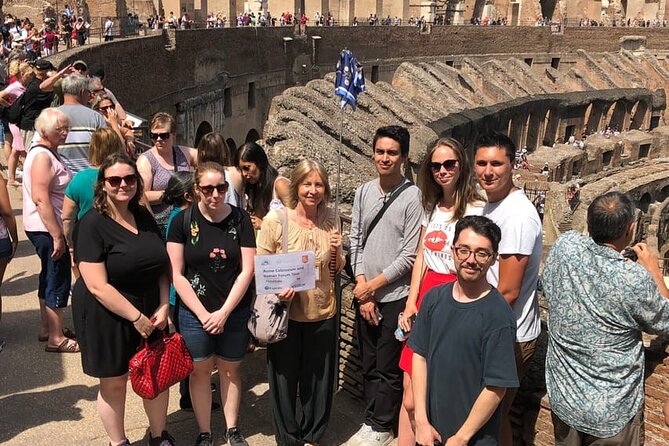
Group size is capped at 25 travelers, and the tour runs with a licensed guide. If your group is bigger (over 6 people), you’ll also use audio headsets, which helps everyone hear clearly without pushing and shoving.
Entering the Colosseum: gladiators, engineering, and what you’ll actually notice
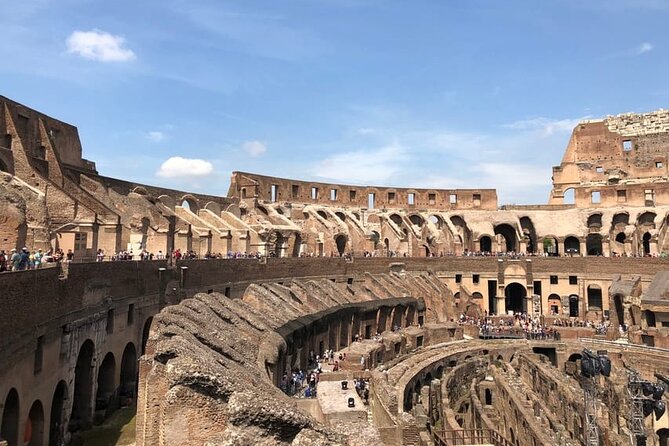
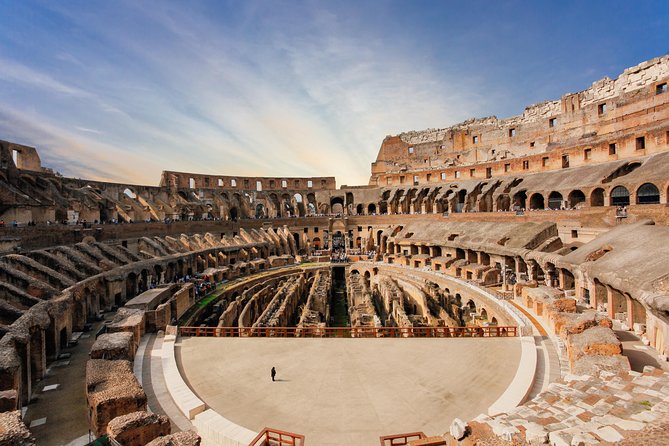
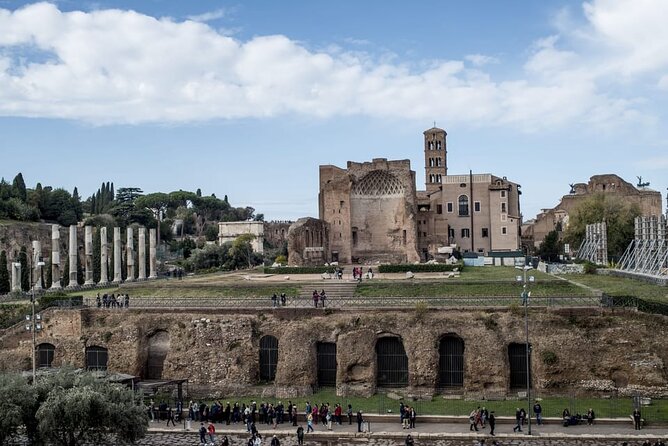
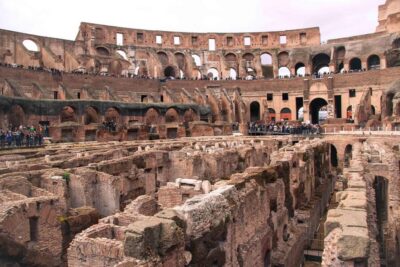
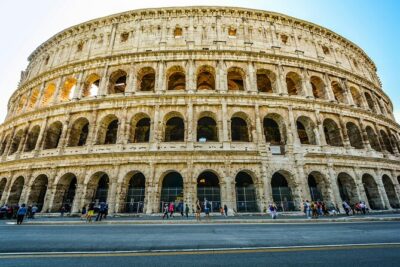
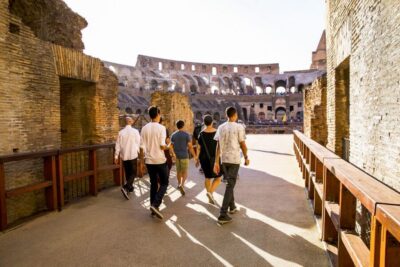
The Colosseum is the one site that feels like it belongs on a postcard and a textbook at the same time. It’s an ancient amphitheater in the heart of Rome, famous for gladiatorial contests and public spectacles. Completed in 80 AD under Emperor Titus, it could hold up to 80,000 spectators.
Your guide’s job is to turn “massive building” into “working machine.” You’ll learn how the elliptical structure was built from stone and concrete, and what kinds of events took place there. The Colosseum wasn’t only about fights. It hosted animal hunts and even mock naval battles. The story becomes less myth and more logistics: where people entered, how crowds would move, and what kinds of performances were possible.
A big part of the experience is also learning how to read the damage. Earthquakes and centuries of looting changed the Colosseum’s shape over time. Seeing what’s missing helps you understand what it once looked like when it was functioning at full scale.
One of the standout themes from the praise is the guide’s energy and patience. Names like Theresa and Naomi come up in compliments for being enthusiastic, professional, and ready with answers, including when weather gets ugly. Even if the sky is not cooperating, you’ll still keep moving with explanations that stay tied to what you’re looking at.
Palatine Hill: the origin story view you can feel in your legs
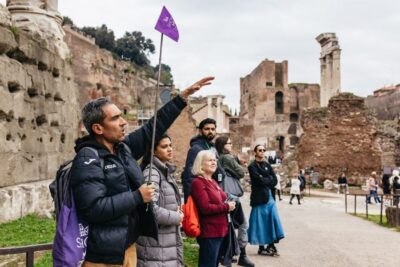
Next you head to Palatine Hill, one of Rome’s seven hills and a key piece of the city’s origin story. This area is tied to the idea of Rome beginning there, including the legend of Romulus and Remus. It’s also where you’ll see the physical footprint of imperial life.
Palatine Hill was home to ruins of imperial palaces, including the lavish residence associated with Emperor Augustus. Your guide will help you connect the dots between legend, politics, and the way rulers displayed power through architecture and gardens.
One reason Palatine is a smart second stop is the viewpoint. From here you get a natural sense of how the Roman Forum and the Colosseum sit in relation to the hill. You’re not just looking down at ruins. You’re starting to understand how the city was organized around authority and spectacle.
You’ll also walk through areas tied to temples and gardens within the ruins. That mix matters because it changes the mood from “arena” to “palace and everyday power.” If you’re the kind of person who likes a variety of scenery during a single guided block, this stop delivers.
The Roman Forum: where politics, religion, and speaking mattered
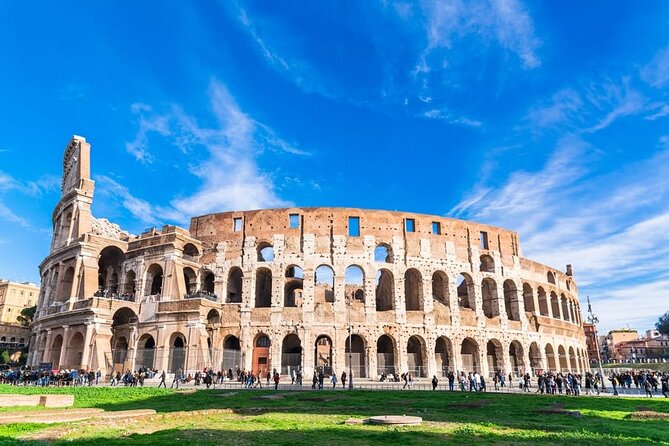
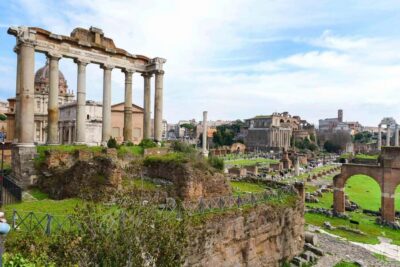
Then you move into the Roman Forum, which was basically the beating heart of ancient Rome. This wasn’t a random collection of stones. It was the center for politics, religion, and public life across the Republic and into the Empire.
The Forum is full of named remnants that help you map out what you’re seeing. You’ll pass by remains connected to major institutions like the Senate House, plus temples and the Rostra, the platform where public speakers—orators—addressed crowds. That detail is key. The Forum wasn’t only about buildings. It was about speeches, decisions, and public theater.
Between the Capitoline and Palatine hills, the Forum sits in a spot that makes the city’s social gravity obvious. Your guide will help you interpret the spatial logic. You start to see why the Via Sacra mattered and how people used this area to project influence.
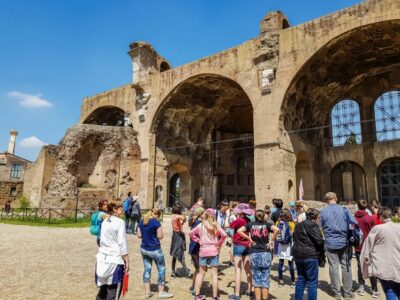
At this stage in the tour, the value is in context. The Forum can look like a field of broken columns if you don’t have a guide to point out what mattered. With a proper explanation, it becomes a map of civic life.
Live AI translation in 40 languages: the practical way it helps
The standout feature is the AI real-time multilingual translation. The concept is simple: the licensed guide speaks in their native language, and the translated narration shows up in your earphones after a short delay. The timing you can expect is about 5 to 15 seconds.
If you’re traveling with multiple nationalities, this matters more than it sounds. You don’t need to pause for side conversations or hunt for someone who understands everyone’s language. The narration is delivered directly to you, which helps keep the flow of the tour moving.
Accuracy is described as 90% to 100% across multiple languages, and the audio is delivered with neural voices designed to sound natural and clear. Practically, it’s the difference between hearing “ruins facts” and actually understanding how the guide connects events, rulers, and building purpose.
To use it, you’ll rent a device or smartphone setup depending on the option you select. The tour description says you rent the device, enjoy the tour, and return it at the end. I like that the system is meant to be easy: speak naturally from the guide’s side, listen from yours, and keep sightseeing without constant friction.
One more practical note: the translation system is most helpful when you actively listen. If you split your attention between photos and the audio, you’ll miss parts of the storyline.
Small groups, headsets, and a guide who keeps the thread
This tour runs with max 20/25 people and includes a legally licensed guide. That group size is part of what makes the experience feel efficient. You get a guided explanation, but you don’t feel swallowed by a crowd.
Headsets are provided if the group is more than 6 people, which makes a difference at the Colosseum and Forum where voices can get swallowed by acoustics and traffic. It also helps you stay oriented. You spend less time trying to hear across the gap and more time actually understanding what your guide is pointing out.
The strongest praise themes connect to guide style: enthusiasm, professionalism, humor, and staying on schedule. Guides like Elizabeth are specifically mentioned for keeping to the timeline across Colosseum and Palatine Hill. Theresa is praised for being patient, even in rainy conditions. And Naomi gets credit for answering questions and packing in information without losing the human feel of a tour.
Price and value: when $45.86 makes sense
The price is $45.86 per person, and admission tickets to all three stops are included. On a normal Rome day, you’ll pay for entry into major sights and still be left with the “what am I looking at” problem unless you book a guide.
For this tour, the value isn’t just the sites. It’s the combination: access, interpretation, and a guided route that moves from arena to palace hill to civic center. If you’re short on time, that efficiency is real money saved in both planning and energy.
It’s also relevant that this is booked quite far ahead on average—about 83 days in advance. That’s a hint that popular time slots can fill up. If your trip dates are fixed, you’ll save yourself stress by reserving early.
The one trade-off is time pressure. Three hours means you’re paying for convenience, not for slow exploration. If you want to linger for hours in one area, a longer standalone guide or self-guided approach might suit you better.
Who this tour fits best (and who should choose differently)
This tour fits you best if you:
- have limited time and want three major sights in one go
- like a guided storyline that turns ruins into “what happened here”
- care about language access and want AI translation in 40 languages
- prefer smaller groups over bus-tour crowds
It may not fit you as well if you:
- want to wander slowly with long breaks, especially inside the Forum
- dislike any schedule at all
- want a deep, stop-and-stare archaeology pace rather than a high-impact tour
Quick tips so your visit goes smoother
- Bring your passport or ID for Colosseum entry.
- Arrive 15 minutes early at Piazza del Colosseo.
- If you choose the AI option, test your audio on the device setup and keep the sound at a comfortable level.
- Wear shoes you can walk in for several stops. You’ll cover a lot of ground in a short window.
Should you book Best of Colosseum Experience?
I’d book it if your Rome plan includes the Colosseum, Palatine Hill, and the Roman Forum and you want a guided route that makes them connect. The live AI translation is a major advantage when language mix matters, and the group size keeps the experience from feeling like a conveyor belt.
I’d skip it or consider a different format if you’re the type who needs a long, quiet roam. Three hours is great for clarity and momentum, but it doesn’t replace the freedom of a full-day, unhurried exploration.
FAQ
FAQ
What locations are included in this tour?
You visit the Colosseum, Palatine Hill, and the Roman Forum.
How long is the tour?
The tour lasts about 3 hours.
Is admission included for all three sites?
Yes. Admission tickets are included for the Colosseum, Palatine Hill, and the Roman Forum.
Is there a mobile ticket?
Yes. The tour uses a mobile ticket.
Is real-time translation available, and in how many languages?
Yes. The AI translation system provides real-time multilingual narration, translated into multiple languages, with 40 languages highlighted in the tour name.
How fast is the AI translation delivered after the guide speaks?
The translated narration is delivered within about 5 to 15 seconds.
Do I need my passport or ID?
Yes. Bringing your passport or ID is mandatory for access to the Colosseum.
Where is the meeting point?
The tour starts at Piazza del Colosseo, 1a, 00184 Roma RM, Italy.
Do I need to arrive early?
Yes. Arrive at least 15 minutes before the starting time.
Is food and drink included?
No. Food and drinks are not included.
More Tours in Rome
- Vatican Museums, Sistine Chapel & St. Peter’s Basilica Tour
★ 4.3 · 73,970 reviews - Vatican Museums, Sistine Chapel & St Peter’s Basilica Guided Tour
★ 4.5 · 39,149 reviews - Rome: Colosseum, Palatine Hill and Roman Forum Guided Tour
★ 4.8 · 32,814 reviews - Rome: Guided Tour of Colosseum, Roman Forum & Palatine Hill
★ 4.7 · 27,897 reviews - Rome: Colosseum, Roman Forum and Palatine Hill Guided Tour
★ 4.5 · 23,903 reviews - Rome: Colosseum Arena Floor, Palatine & Forum Guided Tour
★ 4.5 · 20,180 reviews
More Tour Reviews in Rome
- Vatican Museums, Sistine Chapel & St. Peter’s Basilica Tour
★ 4.3 · 73,970 reviews - Vatican Museums, Sistine Chapel & St Peter’s Basilica Guided Tour
★ 4.5 · 39,149 reviews - Rome: Colosseum, Palatine Hill and Roman Forum Guided Tour
★ 4.8 · 32,814 reviews - Rome: Guided Tour of Colosseum, Roman Forum & Palatine Hill
★ 4.7 · 27,897 reviews - Rome: Colosseum & Forum with Audio Guide App -Optional Arena
★ 4.2 · 24,770 reviews - Rome: Colosseum, Roman Forum and Palatine Hill Guided Tour
★ 4.5 · 23,903 reviews
Ancient Rome, Kept Going
- Rome: Colosseum, Palatine Hill and Roman Forum Guided Tour
★ 4.8 · 32,814 reviews - Rome: Guided Tour of Colosseum, Roman Forum & Palatine Hill
★ 4.7 · 27,897 reviews - Rome: Colosseum & Forum with Audio Guide App -Optional Arena
★ 4.2 · 24,770 reviews - Rome: Colosseum, Roman Forum and Palatine Hill Guided Tour
★ 4.5 · 23,903 reviews - Rome: Colosseum Arena Floor, Palatine & Forum Guided Tour
★ 4.5 · 20,180 reviews - Rome: Colosseum Arena, Palatine Hill & Forum Guided Tour
★ 4.7 · 14,510 reviews
Just added to our Rome reviews





Colosseum & Ancient Rome Tours, compared.
 ★ 4.8Colosseum, Palatine Hill and Roman Forum Guided TourFrom $5232,814 reviews
 ★ 4.7Guided Tour of Colosseum, Roman Forum & Palatine HillFrom $5527,897 reviews
 ★ 4.2Colosseum & Forum with Audio Guide App -Optional ArenaFrom $4124,770 reviews
 ★ 4.5Colosseum, Roman Forum and Palatine Hill Guided TourFrom $5923,903 reviews
 ★ 4.5Colosseum Arena Floor, Palatine & Forum Guided TourFrom $4120,180 reviews
 ★ 4.7Colosseum Arena, Palatine Hill & Forum Guided TourFrom $8414,510 reviews
 ★ 4.6Colosseum,Forum & Palatine Tour + Optional Arena FloorFrom $4513,169 reviews
 ★ 4.7Colosseum: Underground and Ancient Rome TourFrom $16012,691 reviews