
Reviewed · ROME
Assisi Cascia small groups from Rome: Saint Francis and Saint Rita
Assisi and Cascia feel like a reset button. This small-group day runs from Rome early, then you hit Assisi and Saint Rita sites with guided time and real spiritual focus.
I especially like the way the day is paced: you get a 2-hour guided tour in Assisi without that rush-rush feeling, plus knowledgeable guidance from Carola. I also appreciate the practical small-group touch—Max and Roberto handle the driving smoothly so you can focus on the places, not the road.
One consideration: it’s a long 14-hour day with a 6:30 a.m. start, and for certain dates the Lower Basilica and crypt access is not available (15 February to 6 April).
In This Review
- Key highlights I’d plan around
- The Rome-to-Umbria rhythm: what a 14-hour day really means
- Assisi’s guided San Francesco experience (plus Santa Maria degli Angeli)
- Upper basilica vs lower basilica and crypt (important for planning)
- Carola’s Assisi pacing: where the tour feels human
- Cascia: the Shrine of Saint Rita and the power of one devotion
- Roccaporena: Santa Rita’s birthplace, museum details, and prayer spots
- Price and value: is $431.31 a fair deal for this day?
- Who this tour fits best (and who should skip it)
- Should you book Assisi Cascia small groups from Rome?
- FAQ
- FAQ
- How long is the tour?
- What time does the tour start?
- Is pickup offered, and where do I wait?
- What language is the tour in?
- How large is the group?
- What church entrances are included in Assisi?
- Is lunch included?
- Is the body of Blessed Charles Acutis included?
- Can I cancel for a full refund?
Key highlights I’d plan around
- A guided Assisi block that actually teaches: you get a focused 2-hour tour time.
- San Francesco access is structured: upper basilica is included, and lower/crypt has a seasonal rule.
- Saint Rita’s shrine in Cascia: entry to the basilica is built into the itinerary.
- Roccaporena stop is short but meaningful: birthplace, small museum, and prayer spots.
- Visit to Blessed Charles Acutis depends on attendance: admission is free, but timing matters.
- Max group size (up to 42) keeps it manageable: more personal than typical coach chaos.
The Rome-to-Umbria rhythm: what a 14-hour day really means
This is an early start kind of tour. It begins at 6:30 a.m., and pickup is from your lobby or just outside your apartment or B&B—be waiting about 10 minutes early. That means you’ll likely roll out of Rome before the day gets noisy, which is a plus for temples that attract big crowds.
The total time is listed as about 14 hours, and the itinerary builds in three religious/pilgrimage areas: Assisi, Cascia, and Roccaporena. You’re not doing everything at breakneck speed, but you are moving. If you hate feeling pressed for time inside churches, this tour might still work—just go in with the mindset of seeing the big spiritual landmarks, then slowing down during the guided portions.
Transport is handled by a driver, and you’ll also have an assistant for the full day. That matters more than it sounds. When you’re jumping between sacred sites (and sometimes dealing with on-site access rules), having someone keep the day coordinated helps you avoid the “where do we go next?” panic.
One more practical note: the tour runs in English, and it offers a mobile ticket and group discounts. That usually signals a smoother check-in experience, especially on a day when you’re starting early and want minimal friction.
Weighing this one up? Here is how a few Rome favourites compare:
- Vatican Museums, Sistine Chapel & St. Peter’s Basilica Tour
★ 4.3 · 73,970 reviews - Vatican Museums, Sistine Chapel & St Peter’s Basilica Guided Tour
★ 4.5 · 39,149 reviews - Rome: Colosseum, Palatine Hill and Roman Forum Guided Tour
★ 4.8 · 32,814 reviews - Rome: Guided Tour of Colosseum, Roman Forum & Palatine Hill
★ 4.7 · 27,897 reviews
Assisi’s guided San Francesco experience (plus Santa Maria degli Angeli)
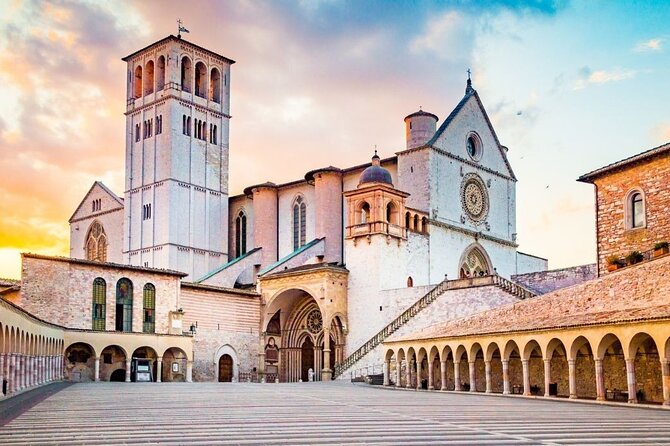
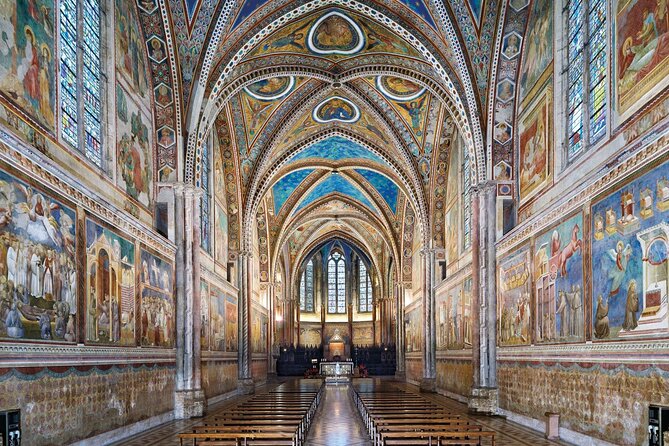
Assisi is the pilgrimage heart for St. Francis, and the itinerary gives you a solid chunk of time there—about 2 hours for the guided portion. You’ll focus on the Basilica of San Francesco, a place famous for its two overlapping churches. It’s one of those locations where the architecture and art feel like part of the same story: your eyes move upward to the frescoes and down toward the sacred spaces people come to pray in.
A highlight here is that you’re not just passing by. You’re getting guided time, and that’s where it clicks. Carola’s style, based on what people appreciated, is informative without rushing. In plain terms, that’s what you want in Assisi. The basilica complex has layered meaning, and the frescos by Giotto and Cimabue are exactly the kind of details that reward a guide who points out what you’re actually looking at.
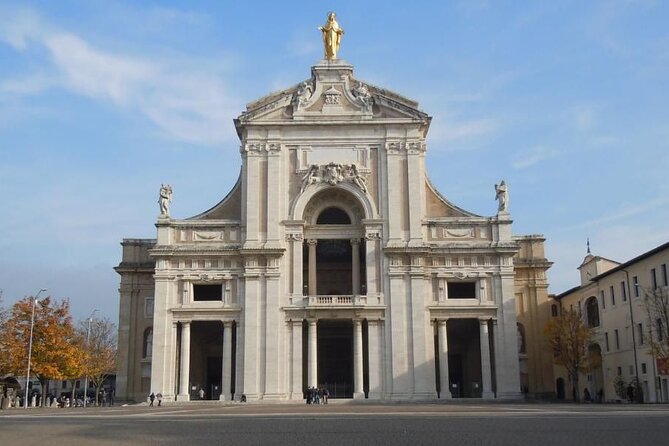
You’ll also have entrance to the Basilica of Santa Maria degli Angeli included. This is a separate basilica in the Assisi area and it changes the feel of the day. After the intense Francis focus of San Francesco, Santa Maria degli Angeli offers another angle on the Franciscan tradition, and it’s the sort of stop that makes the day feel less like a checklist.
Upper basilica vs lower basilica and crypt (important for planning)
The tour includes entry to the Upper Basilica of San Francesco. The listing also notes that access can be verifiable on site for private masses. In other words, you should expect some day-of flexibility depending on what’s happening inside.
The tricky part is the Lower Basilica and Crypt. Access is listed as not allowed from 15 February to 6 April. If your travel dates fall in that window, you’ll still get meaningful Assisi time with the upper basilica, but don’t plan your photos or expectations around seeing the crypt level during those dates.
For me, this is the one logistics detail you should check first. Not because it ruins the day, but because it helps you aim your energy where you can actually access everything.
Carola’s Assisi pacing: where the tour feels human
What people consistently liked was the feel of the day, and that comes down to pacing and people skills as much as it does to sights.
Carola is specifically mentioned for being very informative and for not rushing. That might sound basic, but in Italy, especially in sacred sites, rushing is how you end up standing in the wrong place, missing the point of an artwork, or just getting cranky. A slow, guided rhythm in Assisi helps you enjoy what you’re seeing instead of just collecting it.
You’ll also see why this matters for the frescoes. Giotto and Cimabue are big names, but in the basilica context, the value is in how they fit the religious story and how the space frames the art. A guide who explains that makes the difference between seeing paintings and understanding why pilgrims come.
Then there’s the driving team—Max and Roberto. People praised the safety and the confidence. That sounds like a minor detail, but it’s real comfort on a long day. When you’re leaving Rome early and spending hours on the road, the best scenario is that the journey stays calm and predictable so your energy isn’t drained before you even reach Umbria.




Cascia: the Shrine of Saint Rita and the power of one devotion
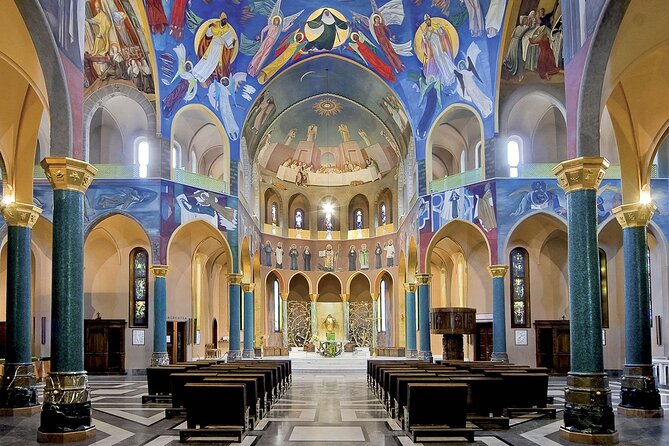
After Assisi, the day shifts from Francis to Rita. Cascia is known for its connection to Saint Rita of Cascia, one of the most venerated saints in Catholic tradition. Your Cascia stop is about 1 hour.
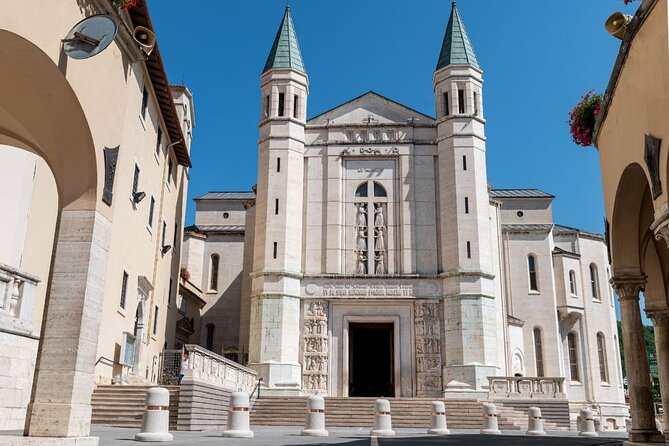
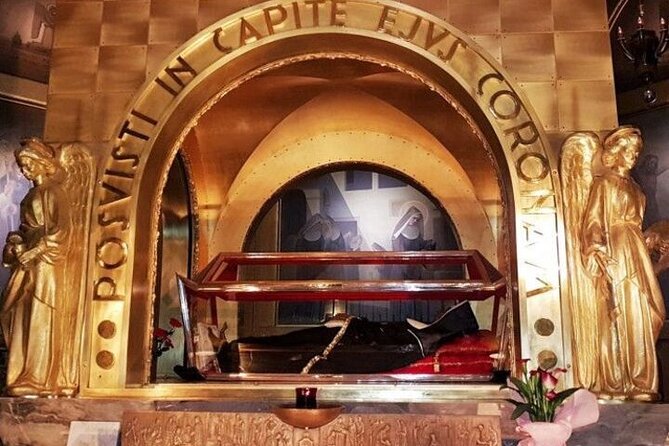
The centerpiece is the Basilica of Santa Rita (the shrine/sanctuary area). Here, the important detail is that the shrine preserves the body of Saint Rita, which has been a site of veneration since her canonization in 1900. Even if you’re not a religious-history buff, that single fact changes how the shrine feels. It’s not just a statue or a symbol behind glass. It’s a living center of devotion, where people come to pray and ask for graces.
You’ll likely notice that Cascia feels quieter than big-name tourist zones. The provided description highlights an atmosphere of prayer and spirituality, and that’s exactly what you should expect. You’re stepping into a place designed for reflection, so it’s worth keeping your voice low and your attention high.
One more thing the itinerary points out: the surrounding nature is mountainous, so there’s a feeling of distance from the buzz of city life. You don’t have a full hiking day here, but the town’s setting helps the shrine stop feel less like a quick detour and more like a full spiritual reset.
Roccaporena: Santa Rita’s birthplace, museum details, and prayer spots
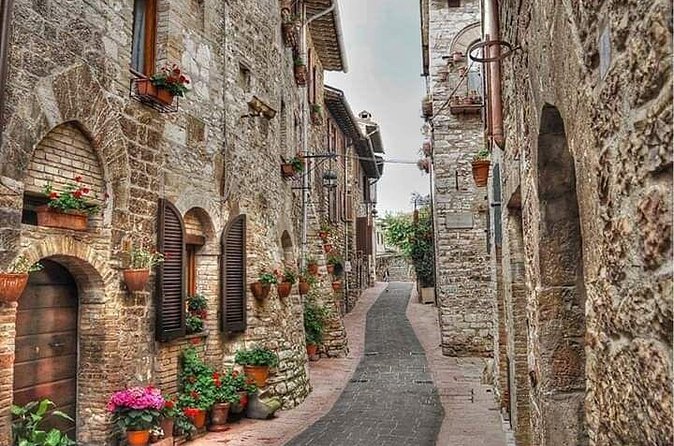
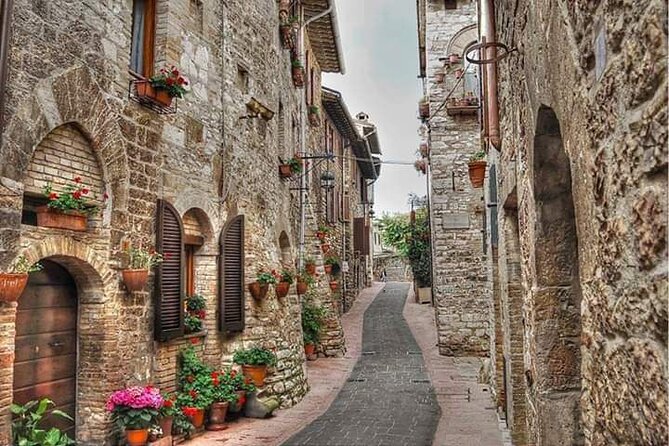
Next up is Roccaporena, a medieval village near Cascia, and the itinerary gives you about 40 minutes. It’s shorter than Assisi or Cascia, but the stop is designed to hit the main Rita landmarks tied to her early life.
The most direct connection is that Roccaporena is described as Santa Rita’s birthplace. Today, the birthplace area has been turned into a small museum collecting objects related to her life and spirituality. If you’re the type who likes context, this museum time helps. You’re not only seeing sacred buildings—you’re getting the story thread of how the devotion began in this specific place.
The itinerary also mentions the Sanctuary of Santa Rita, including:
- the convent where the saint spent part of her youth
- a small church housing some relics attributed to her
- the cave of Santa Rita, described as a natural refuge for prayer and meditation
With only 40 minutes, you won’t get deep-spa time. But you will leave with a clearer mental map of Rita’s story: early life, sacred spaces, then a quieter meditation setting in the cave.
This stop is best if you enjoy small places and short, focused visits. If you prefer long museum stays, you might wish you had more time—but then again, the tour is built around connecting multiple pilgrimage points in one go.
Price and value: is $431.31 a fair deal for this day?
The price shown is $431.31 per person for an approximately 14-hour small-group outing. On the surface, that can feel steep compared with standard “big bus” day trips. Here’s how I’d judge the value instead:
You’re paying for several layers at once:
- Round-trip pickup and drop-off from central Rome lodging areas
- a driver and an assistant for the entire duration
- guided time in Assisi (2 hours) rather than only self-guided wandering
- entrances that include major basilica access points (Assisi upper basilica, Santa Maria degli Angeli, Cascia basilica, and specific lower/crypt access with seasonal rules)
- a stop that includes the body visit of Blessed Charles Acutis, where admission is free but access depends on attendance
Also, the tour is capped at up to 42 people. Smaller limits often mean fewer delays and more manageable movement between stops.
Lunch is not included, so you’ll need to plan for that cost and how you’ll handle meal timing on the road. But when you’re comparing the whole bundle—transport + guided religious-site access + multiple towns—this price starts to look more like a “you’re buying logistics and guided entry” deal.
Is it the best value for everyone? No. If you’d rather do Umbria slowly with stops of your choosing, you might find cheaper independent options. But if you want a one-day highlight path with competent guidance and built-in religious-site access, this format is often worth it.
Who this tour fits best (and who should skip it)
This tour is a great fit if you:
- want a focused Assisi-to-Rita pilgrimage day without arranging transport yourself
- appreciate guided explanations in major basilicas
- prefer a structured schedule when you’re in a foreign country and want your day to feel easy
It might be less ideal if you:
- need lots of free time to wander on your own without a group pace
- strongly rely on Lower Basilica and crypt access, and your dates fall between 15 February and 6 April
If you’re traveling with family members who get tired easily, the early start plus total time can be tough. Still, the careful driving and guided portions can make it smoother than you’d expect.
Should you book Assisi Cascia small groups from Rome?
Yes—if you want a well-structured day built around St. Francis and St. Rita and you value guided time. The big win here is the combination of Assisi’s 2-hour guided focus and the smooth, safety-minded approach from the team (Carola with the teaching, Max and Roberto with the driving). The itinerary also gives you a spiritual arc: Francis in Assisi, Rita at her shrine in Cascia, then Rita’s birthplace in Roccaporena.
Book it now if you’re okay with a long day and you can work around the seasonal limitation on the Lower Basilica and Crypt. If your top goal is crypt access, check your dates before committing.
FAQ
FAQ
How long is the tour?
The tour is listed as approximately 14 hours.
What time does the tour start?
The start time is 6:30 a.m.
Is pickup offered, and where do I wait?
Pickup is offered. You should wait in the lobby or outside your apartment/B&B about 10 minutes before the agreed time.
What language is the tour in?
The tour is offered in English.
How large is the group?
The tour has a maximum of 42 travelers.
What church entrances are included in Assisi?
The tour includes entrance to the Basilica of Santa Maria degli Angeli and entrance to the Upper Basilica of San Francesco. It also includes entrance to the Lower Basilica and Crypt, but access is not allowed from 15 February to 6 April.
Is lunch included?
No, lunch is not included.
Is the body of Blessed Charles Acutis included?
Yes, there is a visit to the body of Blessed Charles Acutis, subject to attendance. Admission is free.
Can I cancel for a full refund?
Yes. You can cancel for free up to 24 hours in advance of the experience start time for a full refund.
More Tour Reviews in Rome
- Vatican Museums, Sistine Chapel & St. Peter’s Basilica Tour
★ 4.3 · 73,970 reviews - Vatican Museums, Sistine Chapel & St Peter’s Basilica Guided Tour
★ 4.5 · 39,149 reviews - Rome: Colosseum, Palatine Hill and Roman Forum Guided Tour
★ 4.8 · 32,814 reviews - Rome: Guided Tour of Colosseum, Roman Forum & Palatine Hill
★ 4.7 · 27,897 reviews - Rome: Colosseum & Forum with Audio Guide App -Optional Arena
★ 4.2 · 24,770 reviews - Rome: Colosseum, Roman Forum and Palatine Hill Guided Tour
★ 4.5 · 23,903 reviews




