
Reviewed · COLOSSEUM & ANCIENT ROME TOURS
Ancient Rome’s Ultimate Night Walk
Rome at night turns into a timeline.
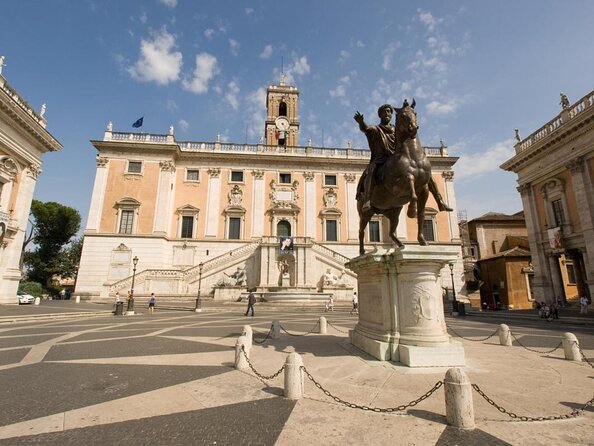
This walk strings together Antiquity to modern Italy with stops that explain who held power, and how the city remade itself around it. You’ll see Michelangelo’s Piazza del Campidoglio, walk the line of Via dei Fori Imperiali, and trace major political sites that still shape Rome today.
I love two things most. First, the route focuses on big ideas you can actually picture: unification, papal influence, the Roman Forum, and today’s government seats. Second, it’s priced at $84.33 for a focused 2 hours 30 minutes with a maximum of 15 people, so the guide can keep the story clear and flowing.
One possible drawback: this is a walking tour and it needs good weather. If rain moves in, you’ll want to be ready with appropriate gear or have a backup plan if the operator reschedules.
In This Review
- Key highlights you’ll feel on this night walk
- A 7:00 pm start on Via dei Serpenti: why timing matters
- Piazza Venezia: Italian unification in a monument-sized story
- Piazza del Quirinale: papal residence history to today’s president’s seat
- Piazza del Campidoglio: Michelangelo’s square and the Roman Mayor seat
- Via dei Fori Imperiali: walking the corridor toward the Roman Forum
- Piazza di Pietra: Hadrian’s Temple columns inside a later façade
- Piazza Colonna: Roman families, Catholic history, and the Prime Minister’s seat
- The complimentary nightcap in the city center: a calm wrap-up
- Price and value: $84.33 for a focused, small-group night walk
- What to wear and how to make the most of the walk
- Who this night walk fits best (and who might want another option)
- Should you book Ancient Rome’s Ultimate Night Walk?
- FAQ
- What time does the tour start?
- How long is the walk?
- Where do I meet the group, and where do we end?
- Is the tour offered in English?
- How large is the group?
- Is free cancellation available?
- What happens if the weather is poor?
Key highlights you’ll feel on this night walk
- Piazza Venezia’s unification monument: how Rome became modern Italy, seen in stone and scale
- Quirinale Square’s power shifts: from papal residence history to the Italian president’s seat
- Michelangelo’s Piazza del Campidoglio: a design masterclass in the middle of government ground
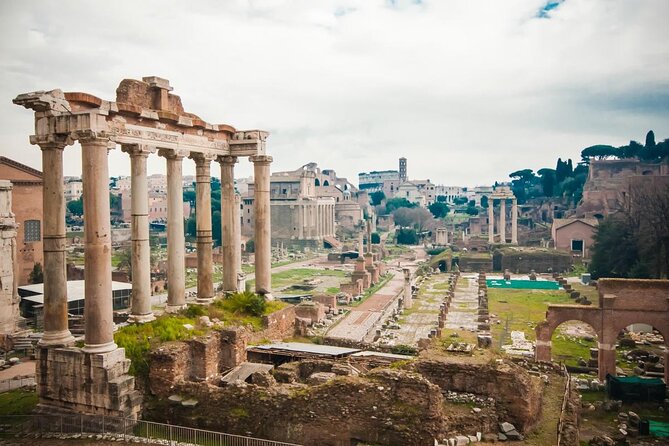
- Via dei Fori Imperiali + the Forum area: ancient Rome’s core in a real walking line
- Piazza di Pietra’s Temple of Hadrian columns: antique parts showing up in a later façade
- A complimentary nightcap at the end: a relaxed close in the city center
A 7:00 pm start on Via dei Serpenti: why timing matters
This tour begins at 7:00 pm, meeting at Via dei Serpenti, 89 (00184 Roma RM). Starting in the evening helps because key squares and viewpoints feel less rushed, and the route naturally transitions from monuments to ruins without daylight glare.
The group cap is 15 travelers, which is a big deal in Rome. With a smaller set, you spend less time playing join-the-line and more time listening and spotting details at street level.
Also, you’re getting a mobile ticket and English narration, with confirmation coming right after booking. If you’re the type who likes a simple check-in and a clear meeting point, this setup is easy. Just know the experience requires good weather, so plan on layers and don’t pack “nice shoes only.”
Still on ancient Rome? A few more we rated
- Rome: Colosseum, Palatine Hill and Roman Forum Guided Tour
★ 4.8 · 32,814 reviews - Rome: Guided Tour of Colosseum, Roman Forum & Palatine Hill
★ 4.7 · 27,897 reviews - Rome: Colosseum & Forum with Audio Guide App -Optional Arena
★ 4.2 · 24,770 reviews - Rome: Colosseum, Roman Forum and Palatine Hill Guided Tour
★ 4.5 · 23,903 reviews
Piazza Venezia: Italian unification in a monument-sized story
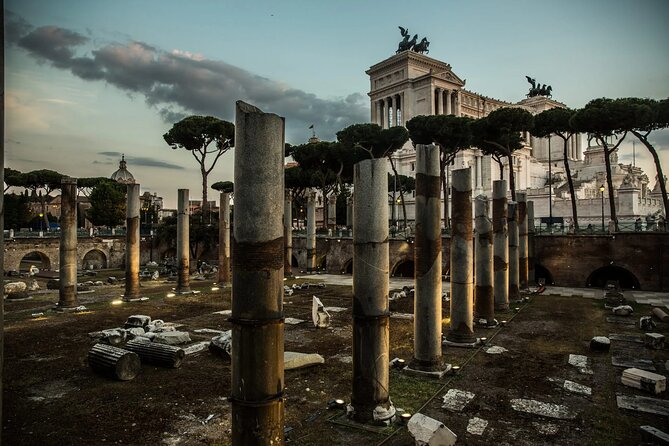
The first stop is Piazza Venezia, where you’ll get the “how Rome became modern Italy” story in about 15 minutes. The area is tied to the history of Italian unification, and the monument there is the kind you can’t ignore even if you try.
What I like about this opening is that it sets a lens. Instead of throwing you straight into ancient ruins, the tour starts with the idea of Rome as a capital that keeps reinventing itself. You begin to notice a pattern: old power sites get reused, rebuilt, and rebranded for the next era.
A practical note: Piazza Venezia can be busy even at night. Give yourself a moment to settle your bearings before the talking starts, then let the guide connect what you’re looking at with the bigger political timeline.
Piazza del Quirinale: papal residence history to today’s president’s seat
Next up is Piazza del Quirinale (also about 15 minutes). Here you learn about the current seat of the Italian president, and also the site’s earlier role as a main papal residence before it was inhabited by the Italian royal family.
This is one of those stops that turns architecture into a family tree of power. You see how the same neighborhood can hold different authority roles across centuries. It also helps you understand why Rome’s political geography feels layered, not linear.
One consideration: because this is tied to government and official use, you’ll likely be looking from the public streets rather than stepping inside. That’s not a flaw. It still works, because the key is what the guide points out and how quickly you connect the past to the present.
Piazza del Campidoglio: Michelangelo’s square and the Roman Mayor seat
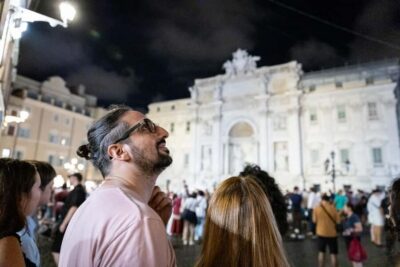
The highlight for design fans is Piazza del Campidoglio (about 15 minutes). You’ll visit the breathtaking piazza designed by Michelangelo, and you’ll see it as the seat of the Roman Mayor.
Michelangelo’s work isn’t just “pretty.” It’s about order—lines, perspective, and how a square can guide your attention. Standing there at night, you can better grasp the intent: this piazza is built to make a civic point of view feel grand and controlled.
The benefit of doing it at this moment in the walk is pacing. After learning about modern executive power at Quirinale, Campidoglio becomes the bridge into older civic traditions. You’re literally walking from contemporary governance to Rome’s older identity as a civic capital.
Worth a look next to this Rome booking:

Via dei Fori Imperiali: walking the corridor toward the Roman Forum
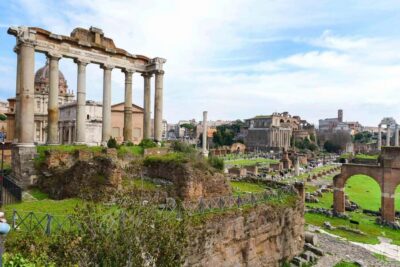
Then the tour moves onto Via dei Fori Imperiali, again with about 15 minutes. This is where the “ancient Rome” part gets real. You’ll intersect the route and view the Ancient Roman Forum, once described as the center of Western civilization—caput mundi.
I like this stop because it gives you a sense of scale. The Roman Forum isn’t just one attraction. It’s a zone, a political and social engine, and the street layout matters. Via dei Fori Imperiali lets you see how later Rome positioned modern streets in relation to ancient sites.
The potential drawback is simple: expect crowds in the general area and keep an eye on your footing. It’s a walking stop, not a sit-and-stare museum moment. If you’re someone who gets tired quickly, plan water breaks before you’re deep into the route.
Also, remember this is a night walk. If visibility is lower due to weather, you might have to rely more on the guide’s direction to spot what you’re looking at. That’s fine, and it’s part of why having a good storyteller matters.
Piazza di Pietra: Hadrian’s Temple columns inside a later façade
At Piazza di Pietra, you’ll pause for about 5 minutes to notice something that feels like a time trick. The facade tied to the local Camera di Commercio still includes original columns of the Temple of Hadrian.
This is the kind of detail that sticks with you. You’re not only learning “ancient stuff existed.” You’re learning how it got reused—how Rome keeps recycling materials and meanings. That’s a big reason Rome history feels present, not dead.
Because the stop is short, your best strategy is to listen first, then look quickly for what the guide points out. If you try to do the “full museum interpretation” thing in five minutes, you’ll feel rushed. Instead, treat it like a guided visual puzzle.
Piazza Colonna: Roman families, Catholic history, and the Prime Minister’s seat
The walk ends at Piazza Colonna, with about 15 minutes spent there. This stop connects you to the history of Roman families who ran the Catholic Church, and it also points out the area’s current role as the seat of the Italian Prime Minister.
This is a strong ending because it loops your understanding back to power—religious power, political power, and the way Rome overlays them in the same geographic space. It also gives your brain an easy takeaway: Rome didn’t replace authority over time. It often layered it.
And yes, the tour uses the end point smartly. You finish near the political heart of modern Italy, so you’re not ending in some random outer corner. It’s a useful location if you want to continue on your own after the walk.
The complimentary nightcap in the city center: a calm wrap-up
One of the tour features is a complimentary nightcap in the city center at the end. You should expect a relaxed finish rather than another big “tour stop.” This is more about letting the story settle while you catch your breath.
Why that matters: Rome can overwhelm you with sights. The nightcap gives you a moment to tie threads together. You’ll likely find yourself replaying the connections the guide made—how each square links to the next.
If you’re driving or just prefer not to drink, it may still be worth asking what’s offered. The tour states a complimentary nightcap, so your best bet is to get clarity in the moment rather than assuming.
Price and value: $84.33 for a focused, small-group night walk
At $84.33 per person for about 2 hours 30 minutes, the value comes from focus. You’re not paying for bus rides or a long, scattered itinerary. You’re paying for a clear sequence of major sites that explain Rome’s shifts from Antiquity to modern government.
The maximum of 15 travelers supports that value. Small groups tend to make it easier to ask questions and stay connected to the story rather than just “move along.” And with English narration and a mobile ticket, you get a smoother experience from start to finish.
Another value point: it’s been booked on average about 14 days in advance. That doesn’t mean you must book immediately, but it hints that dates can fill when travelers lock in their Rome plans. If you’re traveling in peak season or have a narrow window, booking earlier is smart.
What to wear and how to make the most of the walk
This is a walking tour, and the stops sit in major squares and civic areas. You’ll be on your feet through the evening, so comfortable shoes matter more than fashion.
I’d also plan for temperature swings. Even if the day is warm, evenings in Rome can feel cooler, especially if you’re out near open squares. Bring a light layer and check forecasts. The experience requires good weather, so being prepared reduces stress.
Finally, show up ready to listen. The big payoff is not just seeing landmarks. It’s following the explanation of why each place matters: unification, papal and royal shifts, Michelangelo’s civic design, and the Roman Forum’s significance.
Who this night walk fits best (and who might want another option)
This tour is a great fit if you want high-impact history without a museum schedule. It’s also ideal if you like your Rome organized around themes like government, religion, and city power.
It’s especially suitable if you enjoy guided storytelling. The tour has strong satisfaction overall, with an average 4.8 rating and 96% recommended. One name that pops up in the positive narrative is Nick, praised for making the history feel alive with a friendly, clear delivery. If you get a guide with that kind of talent, the walk becomes more than sightseeing.
Skip or consider alternatives if you’re dealing with mobility issues or you hate walking at night. And if rain is likely, be ready for changes since the experience depends on good weather.
Should you book Ancient Rome’s Ultimate Night Walk?
Yes, if you want a short, structured way to connect Rome’s biggest ideas to the streets you’ll actually stand on. The route covers major civic spaces, key historical transitions, and the Forum area in a tight timeframe.
Book it sooner rather than later if your schedule is fixed, since demand can build (it averages 14 days ahead). If weather looks questionable, check closer to the day and pack accordingly. With the small group size and a strong guide reputation, this is one of those evenings that can make Rome feel easier to understand fast.
FAQ
What time does the tour start?
The tour starts at 7:00 pm.
How long is the walk?
The duration is about 2 hours 30 minutes.
Where do I meet the group, and where do we end?
You meet at Via dei Serpenti, 89, 00184 Roma RM, Italy. The tour ends at Piazza Colonna, Roma RM.
Is the tour offered in English?
Yes, it is offered in English.
How large is the group?
The tour has a maximum of 15 travelers.
Is free cancellation available?
Yes. You can cancel up to 24 hours in advance for a full refund, as long as you cancel at least 24 hours before the experience starts.
What happens if the weather is poor?
The experience requires good weather. If it is canceled due to poor weather, you’ll be offered a different date or a full refund.
More Walking Tours in Rome
- Rome: Guided Food Walking Tour with Wine in Trastevere
★ 4.9 · 3,105 reviews - Rome: Trastevere & Campo de Fiori Street Food Walking Tour
★ 4.9 · 2,768 reviews - Rome: Paranormal Night Walking Tour & Secret Backstreets
★ 4.9 · 1,921 reviews - Rome: Trastevere Street Food Walking Tour with Local Expert
★ 4.8 · 1,784 reviews - Rome: Small-Group Guided Day or Night Walking Tour
★ 4.8 · 1,009 reviews - Rome by Night Walking Tour – Legends & Criminal Stories
★ 4.5 · 1,003 reviews
More Tour Reviews in Rome
- Vatican Museums, Sistine Chapel & St. Peter’s Basilica Tour
★ 4.3 · 73,970 reviews - Vatican Museums, Sistine Chapel & St Peter’s Basilica Guided Tour
★ 4.5 · 39,149 reviews - Rome: Colosseum, Palatine Hill and Roman Forum Guided Tour
★ 4.8 · 32,814 reviews - Rome: Guided Tour of Colosseum, Roman Forum & Palatine Hill
★ 4.7 · 27,897 reviews - Rome: Colosseum & Forum with Audio Guide App -Optional Arena
★ 4.2 · 24,770 reviews - Rome: Colosseum, Roman Forum and Palatine Hill Guided Tour
★ 4.5 · 23,903 reviews
Ancient Rome, Kept Going
- Rome: Colosseum, Palatine Hill and Roman Forum Guided Tour
★ 4.8 · 32,814 reviews - Rome: Guided Tour of Colosseum, Roman Forum & Palatine Hill
★ 4.7 · 27,897 reviews - Rome: Colosseum & Forum with Audio Guide App -Optional Arena
★ 4.2 · 24,770 reviews - Rome: Colosseum, Roman Forum and Palatine Hill Guided Tour
★ 4.5 · 23,903 reviews - Rome: Colosseum Arena Floor, Palatine & Forum Guided Tour
★ 4.5 · 20,180 reviews - Rome: Colosseum Arena, Palatine Hill & Forum Guided Tour
★ 4.7 · 14,510 reviews
Just added to our Rome reviews





Colosseum & Ancient Rome Tours, compared.
 ★ 4.8Colosseum, Palatine Hill and Roman Forum Guided TourFrom $5232,814 reviews
 ★ 4.7Guided Tour of Colosseum, Roman Forum & Palatine HillFrom $5527,897 reviews
 ★ 4.2Colosseum & Forum with Audio Guide App -Optional ArenaFrom $4124,770 reviews
 ★ 4.5Colosseum, Roman Forum and Palatine Hill Guided TourFrom $5923,903 reviews
 ★ 4.5Colosseum Arena Floor, Palatine & Forum Guided TourFrom $4120,180 reviews
 ★ 4.7Colosseum Arena, Palatine Hill & Forum Guided TourFrom $8414,510 reviews
 ★ 4.6Colosseum,Forum & Palatine Tour + Optional Arena FloorFrom $4513,169 reviews
 ★ 4.7Colosseum: Underground and Ancient Rome TourFrom $16012,691 reviews
Browse the lists this tour appears in