
Reviewed · COLOSSEUM & ANCIENT ROME TOURS
Ancient Rome: Archeological area Largo Argentina
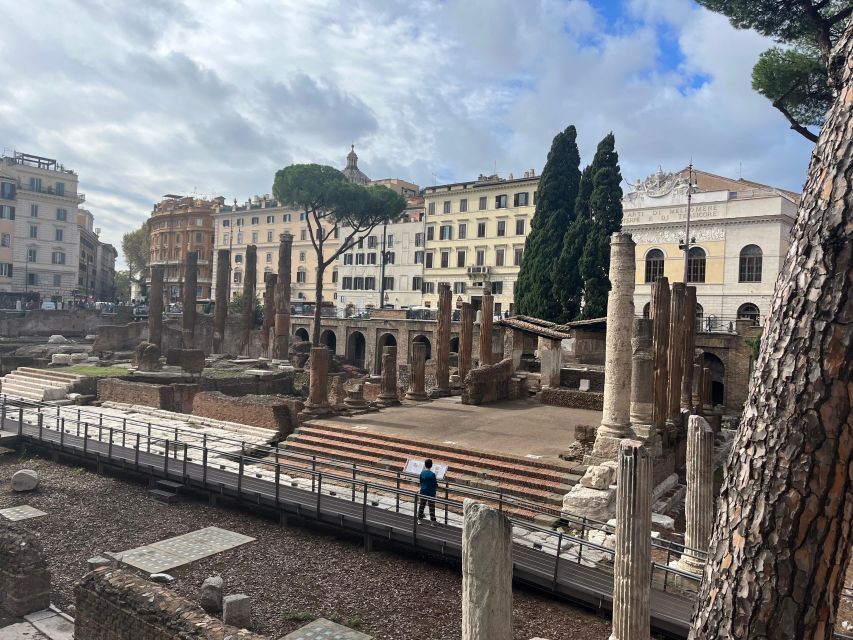
One square in Rome can hold two thousand years of drama. At Largo di Torre Argentina, you’ll see some of the city’s oldest surviving ruins—and the setting tied to Julius Caesar’s assassination. It’s one of those places where the archaeological finds feel personal, even when you’re just standing quietly among stone foundations.
What I like most is the mix of scale and clarity: the four temples (4th to 1st centuries BC) give you a real sense of how old this sacred area is, and the remains linked to the Curia of Pompey help explain what happened on the Ides of March in 44 BC. Another win is the format: you get a short, structured start with a 30-minute multimedia presentation, plus an English audio guide so you can move at a comfortable pace.
The one thing to consider: this is not a guided walking tour with a live guide. You’re relying on the media intro, the audio app, and the reserved access—so if you strongly prefer a person to answer questions as you go, you may want to pair this visit with a separate live-guided option.
In This Review
- Key points to know before you go
- Why Largo Argentina feels different from most “ancient Rome” stops
- Price and value: is $23 worth it?
- Meeting at Touristation Aracoeli: the one logistics trick that saves time
- The multimedia start: 30 minutes that set the stage
- Audio guide support: how to use it without getting lost
- Entering the Largo di Torre Argentina excavations: what you’ll actually see
- The temples (4th to 1st centuries BC): why four matters
- Curia of Pompey and the tuff base: standing near Caesar’s assassination
- The layout: modern Rome around an ancient island of stone
- Time management: a solid 1-hour plan that doesn’t feel rushed
- Who should book this, and who should consider another option
- Practical notes that help your visit go smoothly
- Should you book this Ancient Rome: Largo Argentina visit?
- FAQ
- How long is the Ancient Rome: Archeological area Largo Argentina experience?
- Where do I redeem my voucher?
- What’s included with the ticket?
- Is a guided tour included?
- Is an audio guide available in English?
- What do I need to bring, and what is not allowed?
- Can I expect reserved access to the excavations?
Key points to know before you go
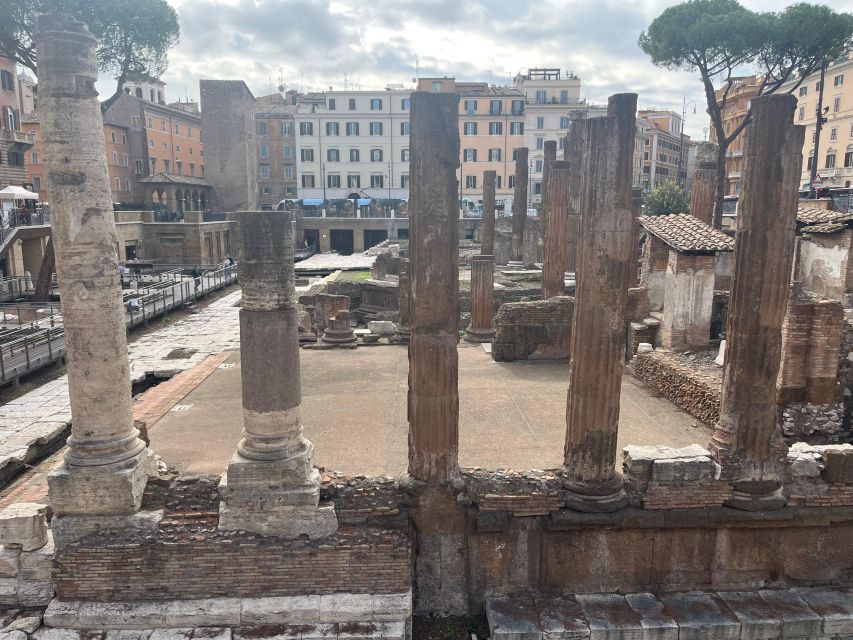
- Caesar’s assassination context: you can see the tuff base remains associated with the Curia of Pompey.
- Four ancient temples to spot: dating from the 4th to the 1st centuries BC.
- 2000+ years of layers: imperial phases through medieval-era structures are preserved.
- Short and focused: the experience is timed to fit into about 1 hour total.
- You’ll start with media: a 30-minute multimedia stop at the Touristation.
Why Largo Argentina feels different from most “ancient Rome” stops
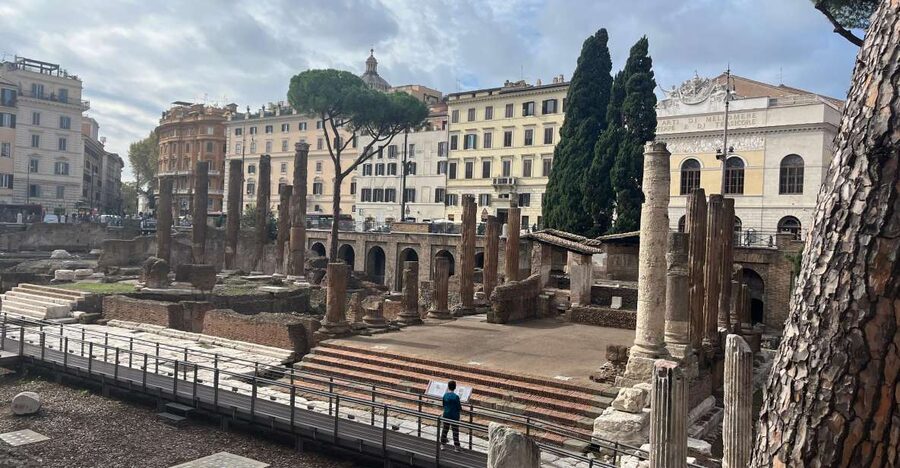
Most Roman ruins are grand. Largo Argentina is oddly intimate. It’s a sacred space that’s been lived on—and fought over—across centuries, which is exactly why it grabs you. You’re not just looking at stones; you’re reading a timeline that stretches from the Republic to later medieval life.
This area centers on temples and the remains around the Curia of Pompey, tied to the assassination of Julius Caesar. Even if you only know the headline story, the physical setting helps you grasp why the moment mattered. You’re also in a location surrounded by modern Rome, so the contrast is sharp: contemporary streets, then suddenly an excavated sacred zone below eye level.
And because the site preserves traces of uninterrupted occupation—imperial phases of the temples and later medieval structures—you don’t have to choose between “old Rome” and “later Rome.” You get both.
Still on ancient Rome? A few more we rated
- Rome: Colosseum, Palatine Hill and Roman Forum Guided Tour
★ 4.8 · 32,814 reviews - Rome: Guided Tour of Colosseum, Roman Forum & Palatine Hill
★ 4.7 · 27,897 reviews - Rome: Colosseum & Forum with Audio Guide App -Optional Arena
★ 4.2 · 24,770 reviews - Rome: Colosseum, Roman Forum and Palatine Hill Guided Tour
★ 4.5 · 23,903 reviews
Price and value: is $23 worth it?
At $23 per person, the value depends on how you like to learn. This ticket price covers reserved entrance and a packaged history format, including:
- a 30-minute multimedia video (at the Touristation stop),
- an English app audio guide,
- paper map,
- WiFi,
- and assistance at the meeting point.
It also includes access aimed specifically at the Largo Argentina excavations. That matters because the site is a specific archaeological area, not just a view from outside.
Here’s the balanced take: you might find that you can see parts of the area from nearby viewpoints, and some visitors note the on-site museum is small. But if you want the structured experience—media intro, audio guidance, and the excavations access—this is a straightforward way to pay for exactly that. For many people doing Rome for the first time, it’s a good “high signal” stop that doesn’t swallow half a day.
Meeting at Touristation Aracoeli: the one logistics trick that saves time
Your booking time refers to when you redeem at TOURISTATION ARACOELI, Piazza d’Aracoeli 16. In front of the office you’ll notice a fountain and orange flags, which makes it easier to spot.
A practical note: you’ll be dealing with two distances in your head:
1) the timing at the Touristation office, and
2) the actual time spent inside the excavations area.
That’s why it helps to arrive a touch early, not because you’ll wander for ages, but because you want to collect your voucher and get oriented without rushing.
Also, you’ll be asked to bring your passport for this activity. It’s a quick requirement, but it can slow you down if you forget.
The multimedia start: 30 minutes that set the stage
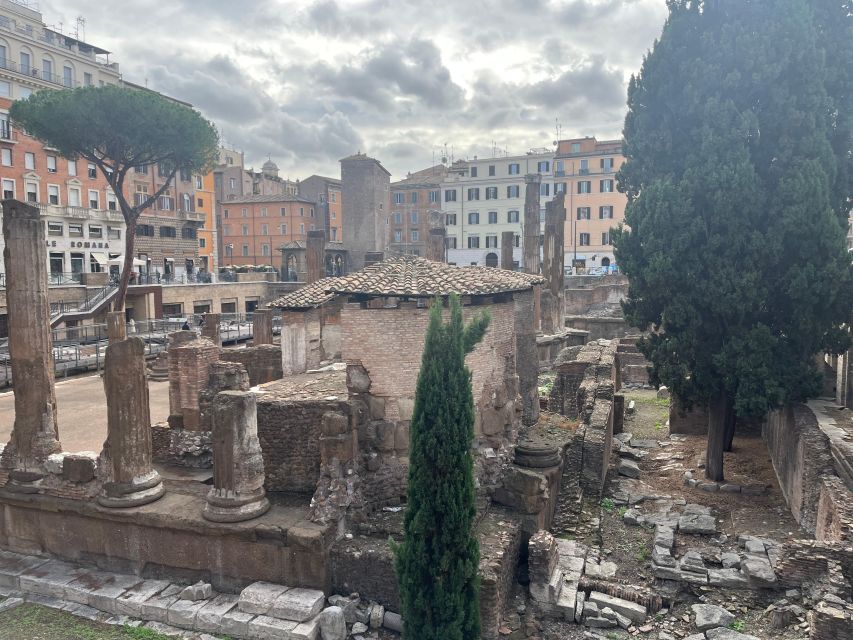
Before you walk among the ruins, you’ll watch a 30-minute ancient Rome multimedia video. Think of it as a fast sketch of what you’re about to see: the sacred area’s development, the key structures, and the assassination-linked location.
This format works well for a couple reasons:
- It gives you names and relationships before you’re looking at ruins scattered in a complex space.
- It reduces the mental load of translating stone foundations into story.
Some visitors also note that the movie helps overlay how buildings may have looked in earlier periods. Even if you already know Roman history, this kind of visual framing can make the archaeological layout easier to understand on the spot.
Audio guide support: how to use it without getting lost
You’ll have an English audio guide app, and there’s WiFi included. That’s important because an app-based experience only works smoothly if you can actually load content where you are.
Use a simple strategy:
- Listen first at a stop where you can match what the voice says to something you can see.
- Then move on and pause just long enough to look again without audio, so the view sticks.
This tour format is self-guided in practice, so you’ll get the most out of it if you let the audio be your anchor rather than trying to read everything at once.
Entering the Largo di Torre Argentina excavations: what you’ll actually see
When you reach the excavations, the sacred area comes into focus fast. You’re there for archaeological remains that were exposed after excavations and demolitions in the 1926 to 1930 window, which helps explain why the area feels like an archaeological pocket within the city.
The standout “what you can spot” pieces are:
- Four temples, dating from between the 4th and 1st centuries BC
- Remains that relate to the tuff base of the Curia of Pompey
- Layers of later structures, including medieval age structures, plus imperial phases of the temples
Because this area preserves so many phases, you don’t just look “at one time period.” You look at a sequence. That’s one of the biggest reasons the experience is worth doing at all: many Roman ruins show you a snapshot; Largo Argentina shows you movement through time.
The temples (4th to 1st centuries BC): why four matters
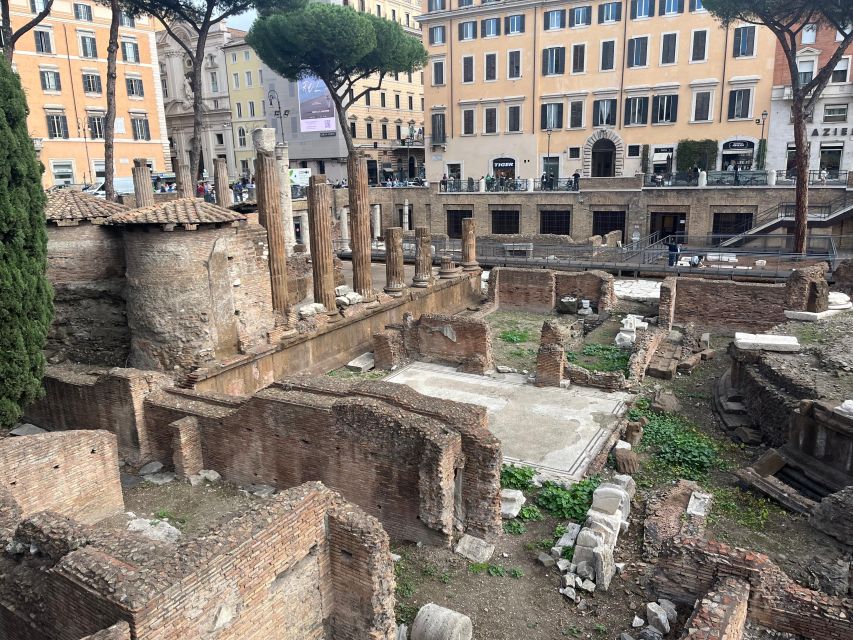
A lot of ruin sites force you to guess which structure is which. Here, the presence of four temples is helpful. You can get a clearer sense of how the sacred area was organized and used.
If you care about understanding religious Rome beyond the Colosseum-and-Forum headline, these temples give you a grounded feel for earlier architecture and sacred space. The dating range—between the 4th and 1st centuries BC—also makes the site a useful reference point when you’re later comparing it to other Roman remains.
Even if you can’t identify every detail by yourself, the temples give you something tangible to orient around. You can spend a few minutes simply looking for the outlines and foundations, then let the audio bring the story into focus.
Curia of Pompey and the tuff base: standing near Caesar’s assassination
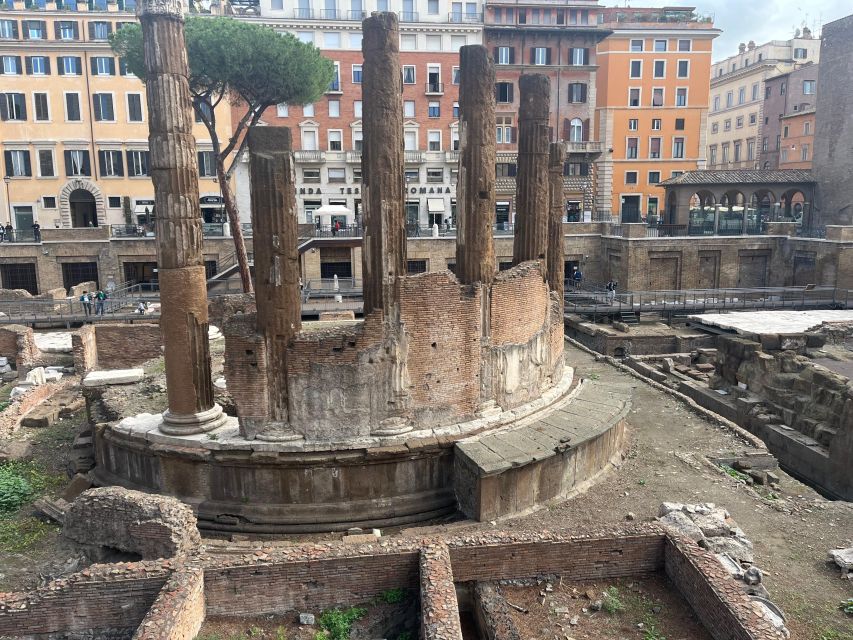
The most famous connection here is the assassination of Julius Caesar on the Ides of March, 44 BC. The site preserves remains that guard the tuff base of the Curia of Pompey, referenced by ancient sources.
This is the moment in the experience that turns the ruins into more than sightseeing. When you’re close to the linked area, the story feels less like a textbook line and more like a place with weight.
A practical tip: don’t rush past this section. Even with a short overall duration, give yourself a minute or two to slow down and look at the ground-level remains rather than only trying to scan for big visual monuments.
The layout: modern Rome around an ancient island of stone
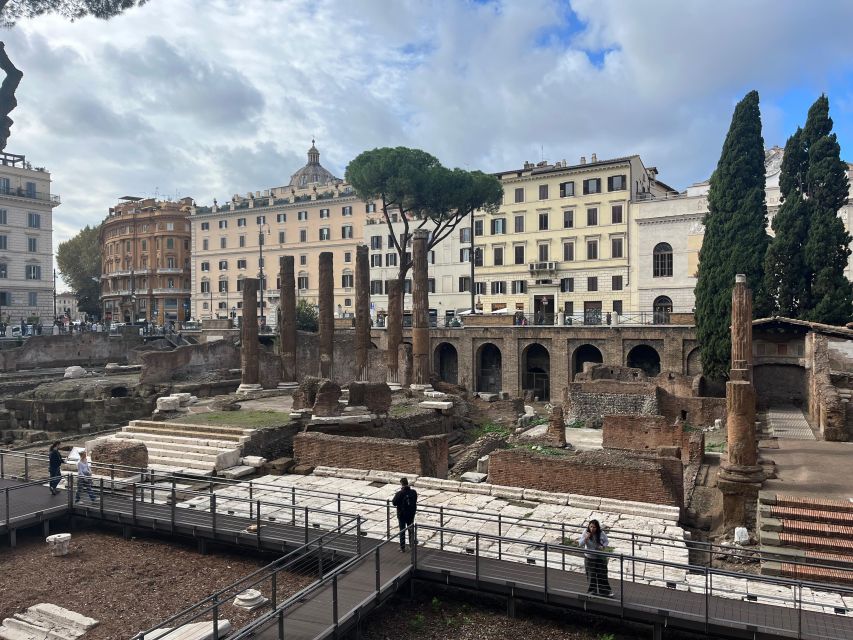
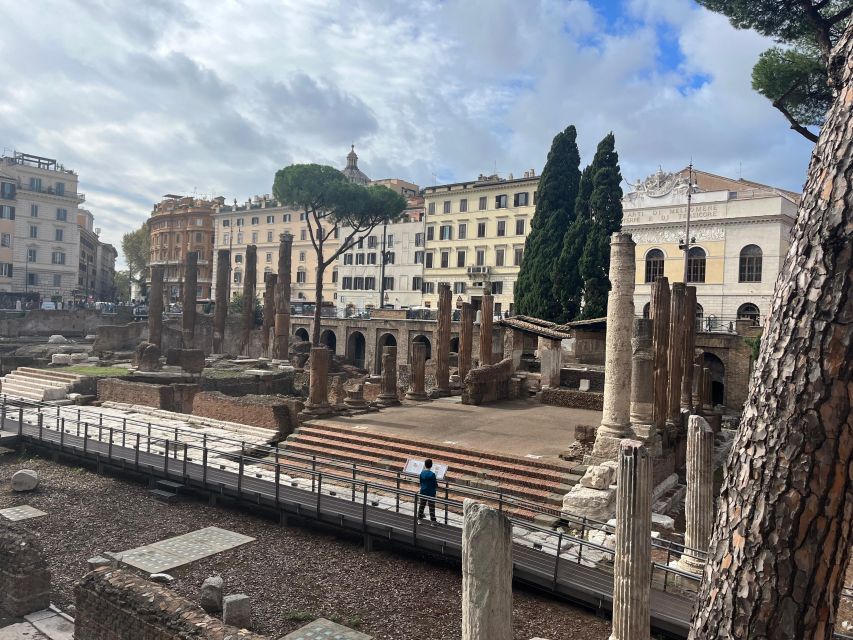
One of the most memorable features is the feeling of being in an excavated pocket—an ancient space surrounded by modern city life. People describe it as an “island” of archaeology in the middle of Rome, and the effect is real.
That matters because the ruins are not just placed; they’re preserved in situ, with the surrounding urban context framing them. You can watch how the site sits in the larger city, which helps you understand why it has remained significant for so long.
This is also where the “two thousand years” idea becomes concrete. The sacred area preserves testimonies of long, uninterrupted life—starting with the temple phases and later extending into medieval structures.
Time management: a solid 1-hour plan that doesn’t feel rushed
The booked activity duration is 1 hour, tied to your time slot for the Touristation office. In a time window that short, you should expect a “selective but meaningful” experience, not a slow wandering museum day.
Here’s a realistic way to pace it:
- Use the multimedia intro to get the map in your head.
- Focus your walking time on the temples and the Caesar-linked Curia area.
- Use the audio to guide your attention, not to cover every possible detail.
If you’re in Rome for a tight schedule, this stop works well because it’s focused. If you have more time, you can always linger after the timed experience, but the built structure helps you avoid spending your whole day in confusion.
Who should book this, and who should consider another option
This activity is a good fit if you:
- want a short, high-impact Rome history stop,
- like using an audio guide to learn at your own pace,
- care about Roman political history tied to real locations,
- and enjoy archaeological sites that show layered time periods.
You might want to think twice if you strongly prefer a live guide. This experience doesn’t include a guided tour, so if you enjoy asking questions or want constant on-the-ground explanation, you’ll likely get more satisfaction by combining it with a separate guided option.
Also, if you travel with bulky gear, plan ahead. Luggage or large bags aren’t allowed, and you can’t bring pets or glass objects. Alcohol and drugs aren’t allowed either, so keep it simple.
Practical notes that help your visit go smoothly
A few details that can save you frustration:
- Bring your passport.
- Leave large bags/luggage at your accommodation.
- Avoid pets, glass objects, and any alcohol/drugs.
- Use the WiFi if your audio needs it.
- Match your expectations to the time: it’s designed for about 1 hour total.
If you keep these in mind, the experience stays pleasant instead of stressful.
Should you book this Ancient Rome: Largo Argentina visit?
I think it’s worth booking if you want one of Rome’s most historically loaded archaeological spaces without turning it into a half-day project. For the money, you’re paying for reserved excavations access plus a structured start (the multimedia intro) and an English audio guide that helps you connect names to what you’re seeing.
Skip it—or pair it with something else—if you need a live guide to feel satisfied, or if your main goal is only to glance at ruins from street level. In that case, you may feel like you could get a lot just by looking around. But if you want the narrative tied to the temples and the Curia of Pompey / Caesar connection, this format gives you a clean path through the site.
FAQ
How long is the Ancient Rome: Archeological area Largo Argentina experience?
The duration is 1 hour.
Where do I redeem my voucher?
You redeem your voucher at TOURISTATION ARACOELI, Piazza d’Aracoeli 16. Look for the fountain and orange flags in front of the office.
What’s included with the ticket?
Included are a 30-minute ancient Rome multimedia video, reserved entrance for the Largo Argentina excavations, an app audio guide of Rome (English), assistance at the meeting point, a paper city map, and WiFi.
Is a guided tour included?
No. A guided tour is not included.
Is an audio guide available in English?
Yes. The audio guide included is in English.
What do I need to bring, and what is not allowed?
You need to bring a passport. Not allowed items include pets, glass objects, and luggage or large bags. Alcohol and drugs are also not allowed.
Can I expect reserved access to the excavations?
Yes. The activity includes reserved entrance for the Largo Argentina excavations.
More Tour Reviews in Rome
- Vatican Museums, Sistine Chapel & St. Peter’s Basilica Tour
★ 4.3 · 73,970 reviews - Vatican Museums, Sistine Chapel & St Peter’s Basilica Guided Tour
★ 4.5 · 39,149 reviews - Rome: Colosseum, Palatine Hill and Roman Forum Guided Tour
★ 4.8 · 32,814 reviews - Rome: Guided Tour of Colosseum, Roman Forum & Palatine Hill
★ 4.7 · 27,897 reviews - Rome: Colosseum & Forum with Audio Guide App -Optional Arena
★ 4.2 · 24,770 reviews - Rome: Colosseum, Roman Forum and Palatine Hill Guided Tour
★ 4.5 · 23,903 reviews
Ancient Rome, Kept Going
- Rome: Colosseum, Palatine Hill and Roman Forum Guided Tour
★ 4.8 · 32,814 reviews - Rome: Guided Tour of Colosseum, Roman Forum & Palatine Hill
★ 4.7 · 27,897 reviews - Rome: Colosseum & Forum with Audio Guide App -Optional Arena
★ 4.2 · 24,770 reviews - Rome: Colosseum, Roman Forum and Palatine Hill Guided Tour
★ 4.5 · 23,903 reviews - Rome: Colosseum Arena Floor, Palatine & Forum Guided Tour
★ 4.5 · 20,180 reviews - Rome: Colosseum Arena, Palatine Hill & Forum Guided Tour
★ 4.7 · 14,510 reviews
Just added to our Rome reviews





Colosseum & Ancient Rome Tours, compared.
 ★ 4.8Colosseum, Palatine Hill and Roman Forum Guided TourFrom $5232,814 reviews
 ★ 4.7Guided Tour of Colosseum, Roman Forum & Palatine HillFrom $5527,897 reviews
 ★ 4.2Colosseum & Forum with Audio Guide App -Optional ArenaFrom $4124,770 reviews
 ★ 4.5Colosseum, Roman Forum and Palatine Hill Guided TourFrom $5923,903 reviews
 ★ 4.5Colosseum Arena Floor, Palatine & Forum Guided TourFrom $4120,180 reviews
 ★ 4.7Colosseum Arena, Palatine Hill & Forum Guided TourFrom $8414,510 reviews
 ★ 4.6Colosseum,Forum & Palatine Tour + Optional Arena FloorFrom $4513,169 reviews
 ★ 4.7Colosseum: Underground and Ancient Rome TourFrom $16012,691 reviews