Reviewed · ROME
10 Wonders of Rome in 3 hrs
Three hours. Ten Rome icons. Minimal hassle. This tour strings together big-name sights like the Colosseum, Pantheon, and Trevi Fountain with a guide who explains what you’re seeing and helps you make sense of the chaos. I love how the pacing stays easy to follow, with plenty of photo stops and quick breaks, and I especially like the practical stuff the guides layer in (like using the metro and how to plan your days once you’ve got your bearings).
One thing to know up front: you’re not going inside monuments. It’s a very walkable route, and there can be stairs toward the end, so come prepared with moderate fitness and comfortable shoes.
In This Review
- Quick Take: Why This 10 Wonders Walk Works
- A 3-Hour Rome Highlights Sprint You Can Actually Finish
- Start at Via del Monte Oppio: Where the Walk Begins
- Stop 1: Colosseum Exterior Time Without Entry Lines
- Stop 2: Via dei Fori Imperiali and the Vittoriano Photo Moment
- Stop 3: Pantheon Area, Espresso Break, and Church-Now Reality
- Stop 4: Passing Pontifical Gregorian University (Jesuit Roots)
- Stop 5: Trevi Fountain Photos and the Water-and-Stone Drama
- Villa Borghese Approach: A “Secret” Panoramic Finale
- Stop 6: Spanish Steps (French/Spanish Steps) for the Romantic Rome Shot
- Stop 7: Tempio di Adriano (Hadrian’s Temple) Quick Context
- Stop 8: Column of Marcus Aurelius for One More Big Visual
- Stop 9 and Beyond: Keeping the Walk Fun (Not Just Facts)
- Value and Price: Is $48.39 for 10 Wonders a Good Deal?
- Who Should Book This Tour?
- What I’d Do After This Walk (So You Get More Out of Rome)
- Should You Book 10 Wonders of Rome in 3 Hours?
- FAQ
- How long is the 10 Wonders of Rome tour?
- What is the price per person?
- Is this tour in English?
- How many people are in the group?
- Do you enter inside the monuments?
- Are admission tickets included?
- Are any stops free to view?
- Where does the tour start and end?
- What fitness level do I need?
- What ages can join?
Quick Take: Why This 10 Wonders Walk Works
- Small group (max 12): more attention, better photo help, and easier questions mid-walk.
- Photo stops built in: you’re not just rushing past; you’ll pause where the views actually work.
- Real orientation value: you leave with context plus practical next-day recommendations.
- No entry tickets required: you’ll enjoy the exteriors and stories without lining up for interiors.
- Coffee and gelato friendly: there’s even an espresso treat near the Pantheon area.
A 3-Hour Rome Highlights Sprint You Can Actually Finish
Rome can feel like an endless checklist. This tour is designed as a fast, manageable primer: 10 famous sights in about 3 hours, on foot, with an official guide and Wi‑Fi included. The best part is not just that you see landmarks. It’s that you learn how they connect—Roman power, religious Rome, and modern symbolism—all stitched together as you walk.
You’ll also get something I really value on orientation tours: a sense of flow. The route is built so you can keep moving without feeling like you’re bouncing randomly across the city. You start at the Colosseum area, work through central historic Rome, then end with a panoramic viewpoint connected to Villa Borghese. That means your first day in Rome (or your only half-day) doesn’t turn into a stress spiral.
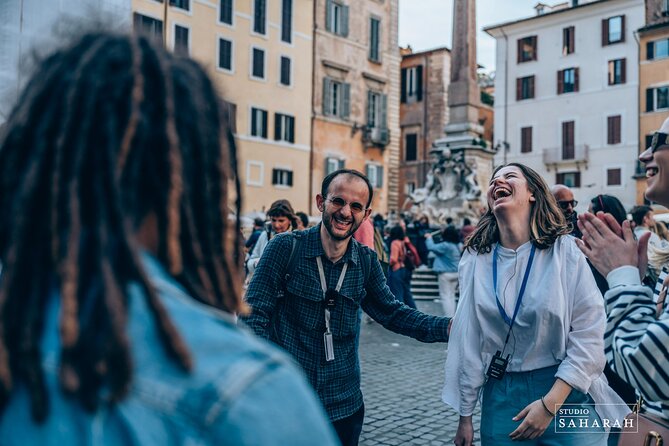
The small group size matters more than it sounds. With a max of 12 people, your guide can slow down for questions, help with the best angle for photos, and keep the group together on the sidewalks that can get crowded fast.
Weighing this one up? Here is how a few Rome favourites compare:
- Vatican Museums, Sistine Chapel & St. Peter’s Basilica Tour
★ 4.3 · 73,970 reviews - Vatican Museums, Sistine Chapel & St Peter’s Basilica Guided Tour
★ 4.5 · 39,149 reviews - Rome: Colosseum, Palatine Hill and Roman Forum Guided Tour
★ 4.8 · 32,814 reviews - Rome: Guided Tour of Colosseum, Roman Forum & Palatine Hill
★ 4.7 · 27,897 reviews
Start at Via del Monte Oppio: Where the Walk Begins

You meet at Via del Monte Oppio, 3 (00184 Roma RM) and finish around Viale del Belvedere (00187 Roma RM). It’s a central route, and the tour notes you’ll be near public transportation—useful if you want to build a longer day before or after the walk.
If you’re choosing between a morning or afternoon tour, I’d pick based on your energy and light for photos. The route includes major open-air stops, so daylight can make a big difference in how the sights look on camera. Either way, the guide will keep you moving, and the stops are timed to give you short windows without turning the day into a long sightseeing marathon.
Practical tip: since it’s a mobile ticket tour, have your phone charged and screen brightness up a bit before you leave your hotel.
Stop 1: Colosseum Exterior Time Without Entry Lines
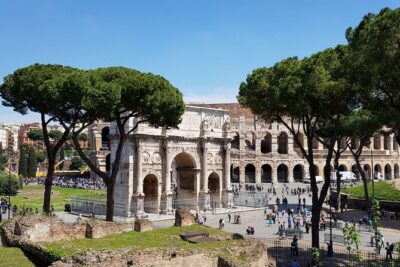
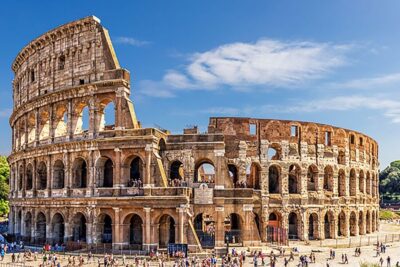
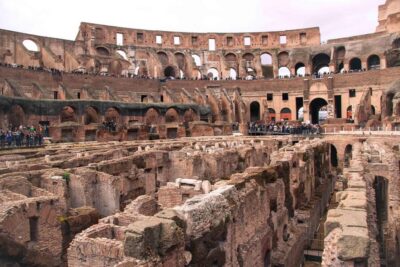
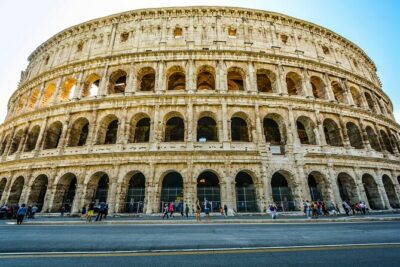
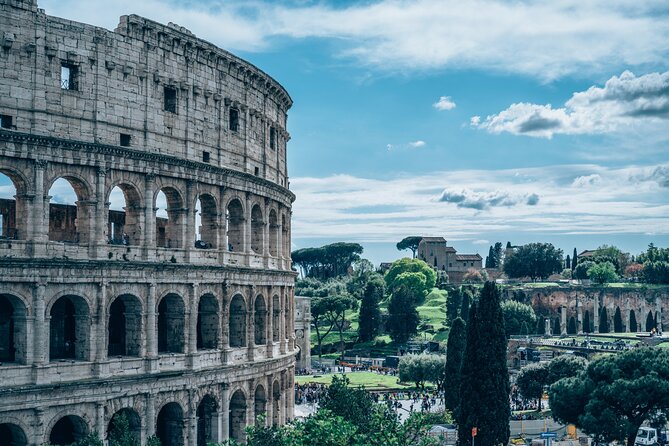
You begin right in front of the Colosseum, and that first viewpoint sets the tone for the whole tour. Even if you don’t go inside, the Colosseum works as a learning anchor: it helps you picture how Roman entertainment, engineering, and politics mixed together in one place.
You get about 15 minutes at this start stop, and because the tour doesn’t include interior admission, you avoid the most time-consuming part of Colosseum visits: entry and lines. That’s a trade-off, but it’s a smart one if you’re on a tight schedule and want the big overview now, with the option to return later for a deeper visit.
What I like about starting here is psychological. Once you’ve seen it from the outside with context, the rest of central Rome feels more readable—like the landmarks have explanations instead of just silhouettes.
Stop 2: Via dei Fori Imperiali and the Vittoriano Photo Moment
Next comes the walk through Mussolini’s grand Via dei Fori Imperiali, followed by photo time near Venezia Square and the Altar of the Fatherland / Vittoriano. This is one of those Rome contrasts that trips people up: you’ve got ancient imperial space nearby, then a 20th-century monument that projects national symbolism on a huge scale.
You’ll have around 10 minutes here, including time for photos in front of the Vittoriano. I like this stop because it trains your eye. You learn how to read the city as layers—not just “old things” versus “new things.” The Vittoriano is dramatic and formal, and it gives you a great visual reference for what Italy wanted to communicate to the modern world.
If you’re the type who enjoys photo composition, pay attention to how the guide positions you for the background lines. Those quick photo stops are not random—they’re placed where you can capture the landmark cleanly without fighting for an angle for 30 minutes.
Stop 3: Pantheon Area, Espresso Break, and Church-Now Reality
Then you reach the Pantheon, still functioning as a church, which makes it one of the most alive monuments in Rome. You’ll spend about 15 minutes here, and this stop is a big part of why this tour feels less like a rushed checklist and more like an introduction.
Right after the Pantheon, the guide adds a bonus: a chance to get Italian espresso, and the description notes the nearby well-known Gelateria Fiocco Di Neve for ice-cream lovers. That matters because Rome mornings and afternoons can get hot, and a quick break keeps the tour enjoyable instead of just educational.
Even without going inside, the Pantheon’s exterior presence does the job. You’ll learn why it’s still meaningful now, not just famous for ruins. That’s one of the biggest wins for first-time visitors: you see a landmark and understand how it keeps working in daily life.
Stop 4: Passing Pontifical Gregorian University (Jesuit Roots)
You pass by the Pontifical Gregorian University, noted as the first university founded by Jesuits. This is a “walk-and-learn” stop—about 10 minutes of contextual talking while you move through central streets.
Why I think this is a good inclusion: it broadens your Rome beyond gladiators and emperors. Rome isn’t only built on ancient politics; it’s also built on religious education and institutions that shaped European history. Even if you only catch a quick glimpse as you pass, the guide’s framing makes the city feel connected instead of random.
Stop 5: Trevi Fountain Photos and the Water-and-Stone Drama
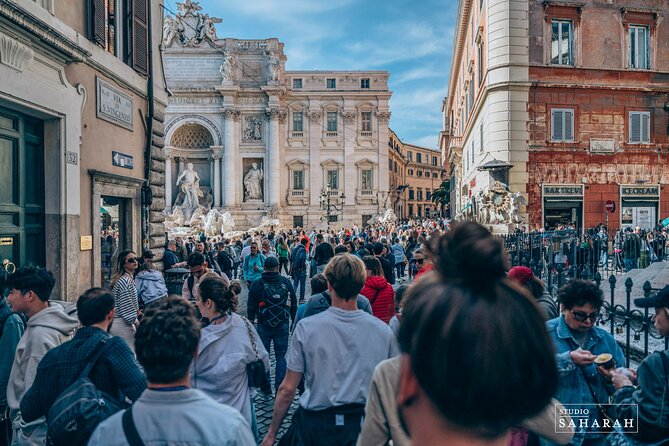
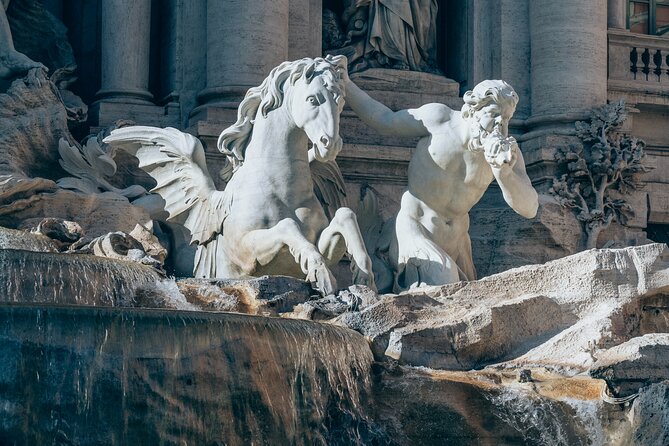
Next up is Trevi Fountain, a must-see for almost everyone. You’ll admire it for about 15 minutes, and the itinerary specifically marks this stop as admission free since you’re viewing it from public space.
Trevi is famous for a reason, but it can also feel chaotic up close. The value here is that your guide helps you get the moments that matter: where to stand for photos and how to take in the sculptural details without losing the thread of the story. You’ll be reminded that it’s not only postcard scenery; it’s water, engineering, and artistry blended into one theatrical setting.
A fun note from the experience: the walk includes a bit of personal warmth—one guide even treated a guest during the tour and kept the surprises going. Whether you’re tossing a coin or just staring at the stonework, this is a high-impact stop that’s worth doing on a first visit.
Villa Borghese Approach: A “Secret” Panoramic Finale
After Trevi, the route passes by Villa Borghese Park and ends at a final panoramic viewpoint described as the Secret panoramic view. This is the emotional payoff at the end of a walk like this: after all the landmarks, you get the city’s layout in one wide look.
The finish is at Viale del Belvedere, and the reviews note there may be stairs at the end. That doesn’t mean it’s a deal-breaker, but it does mean you should wear shoes with grip and expect a short push at the final stretch.
This is also where the small-group format shines. When you reach a viewpoint, you want help repositioning for the best angle without turning it into a crowd scene. With a max of 12, it stays manageable.
Stop 6: Spanish Steps (French/Spanish Steps) for the Romantic Rome Shot
You’ll also hit the Spanish Steps, known for their elegant layout and romantic atmosphere. This stop is around 10 minutes, and it’s marked admission free, since you view it from outside.
The Spanish Steps are a classic Rome photo magnet. I like that the tour schedules this stop so you can actually enjoy it rather than sprint through it. You’ll get a chance to look upward, spot the flow of the stair design, and take photos that include more of the surrounding streets instead of only the steps themselves.
If you’re doing this tour early in your trip, the Spanish Steps is also a great landmark for navigation later. You’ll use it as a mental anchor for where you’ve been and where you want to go next.
Stop 7: Tempio di Adriano (Hadrian’s Temple) Quick Context
Next comes Tempio di Adriano, with the tour mentioning the Temple of Hadrian and providing about 5 minutes to talk through it. It’s shorter than Trevi or the Pantheon, but that’s the point: not every stop is designed to be a long museum moment.
This is still valuable because Hadrian’s Rome is part of the story behind the city’s evolution. The guide’s job here is to connect what you see on the street to the larger timeline of Roman building styles and political priorities.
Stop 8: Column of Marcus Aurelius for One More Big Visual
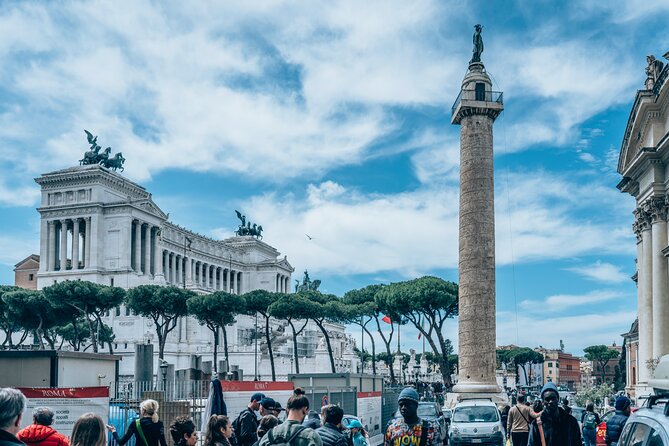
Then there’s the Column of Marcus Aurelius, discussed for about 4 minutes. This stop is marked as free in the itinerary details, so you’re not paying entry to appreciate it.
Columns like this help you understand Rome as a culture of storytelling in stone. You see a monument that’s basically a historical text—one that doesn’t need English signage to make a point. You might not have time to read every detail, but you’ll leave understanding what the column represents and why it’s important.
Stop 9 and Beyond: Keeping the Walk Fun (Not Just Facts)
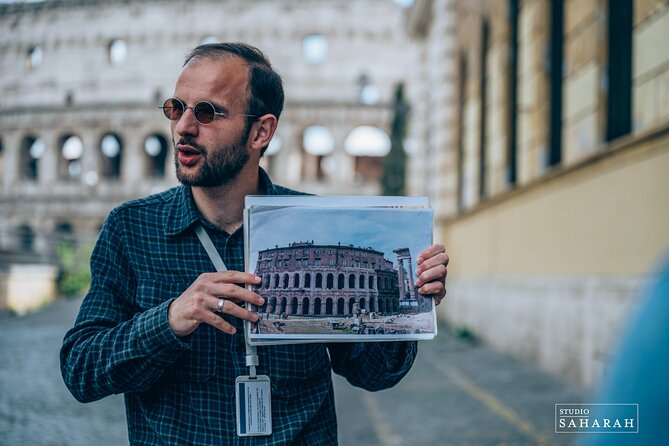
What separates this tour from many “look at the famous stuff” walks is the guide style. Reviews highlight guides like Joseph, Drita, and Isuf for being smart, funny, and interactive. I especially like when a guide mixes short quizzes or memory games into the stops—because it turns the information into something you’ll actually remember later.
And the pacing is built around real-life tourism needs: quick photo pauses, short restroom or coffee moments, and enough time at each sight to feel present instead of frantic. One review even points out that the walking time can feel smooth because of how well the guide manages the group.
Value and Price: Is $48.39 for 10 Wonders a Good Deal?
For $48.39 per person over about 3 hours, you’re paying for three things: (1) a structured route through central Rome, (2) an official guide, and (3) the small-group experience (max 12).
You’re not paying for monument entry tickets, because the tour explicitly notes admission tickets are not included, and you won’t enter inside monuments. That’s actually part of the value math. If you have limited time, paying for guided context without stacking ticket lines can be the smarter way to go.
I think the price feels fair if you use the tour as an orientation tool. When you do this on your first day, you’ll likely spend less time wandering blindly later. Several guides also share practical recommendations after the tour, which helps you turn your remaining sightseeing time into targeted plans instead of guesswork.
One more detail that can make a difference: the experience offers Wi‑Fi and includes a mobile ticket. Small extras, but they help when you’re hopping between streets and trying to pull up directions quickly.
Who Should Book This Tour?
This is a good fit if:
- You want a first-day overview and like getting bearings fast.
- You enjoy history stories more than ticketed museum time.
- You like guided photo stops (and don’t want to scramble for angles alone).
- You can handle steady walking and are okay with possible stairs at the end.
It’s not the best fit if you’re expecting to “tour inside” major monuments like the Colosseum or Pantheon. This is about seeing, learning, and connecting the city’s landmarks from the outside.
What I’d Do After This Walk (So You Get More Out of Rome)
Here’s how I’d use this tour to stretch your day:
- Plan one or two deeper returns to your top two sights from the walk (often the Colosseum and Pantheon are the obvious picks).
- Build your other activities around where you now know the city’s geography.
- If you love food stops, keep the Pantheon area in mind since the espresso and gelato references make it easy to revisit.
Because you’ll finish near Viale del Belvedere, you’ll likely be set up to keep going in a scenic direction rather than ending in the middle of nowhere.
Should You Book 10 Wonders of Rome in 3 Hours?
Yes, if you want a guided, small-group way to see a lot of Rome’s top icons with less stress. The biggest strength is the combination of structured route + photo stops + guide storytelling, plus the fact that you avoid monument interior lines by staying focused on exteriors.
I’d skip it only if you’re specifically hunting for inside-the-building access. Also, if you hate walking or stairs, keep your expectations realistic for the final viewpoint climb.
If your goal is to get your bearings and understand Rome’s layers fast, this one is an efficient, fun primer—and it gives you plenty of material to build the rest of your trip.
FAQ
How long is the 10 Wonders of Rome tour?
It’s about 3 hours.
What is the price per person?
The price is $48.39 per person.
Is this tour in English?
Yes, it’s offered in English.
How many people are in the group?
The tour has a maximum of 12 travelers.
Do you enter inside the monuments?
No. The tour notes that you won’t enter inside the monuments.
Are admission tickets included?
No. Admission tickets are not included.
Are any stops free to view?
Yes. The itinerary lists Trevi Fountain and Spanish Steps as admission free, along with the Column of Marcus Aurelius.
Where does the tour start and end?
It starts at Via del Monte Oppio, 3, 00184 Roma RM and ends at Viale del Belvedere, 00187 Roma RM.
What fitness level do I need?
The tour is for people with moderate physical fitness, and it involves a fair amount of walking.
What ages can join?
Participants should be 11 years old and up. Babies under 2 are free.
More Tour Reviews in Rome
- Vatican Museums, Sistine Chapel & St. Peter’s Basilica Tour
★ 4.3 · 73,970 reviews - Vatican Museums, Sistine Chapel & St Peter’s Basilica Guided Tour
★ 4.5 · 39,149 reviews - Rome: Colosseum, Palatine Hill and Roman Forum Guided Tour
★ 4.8 · 32,814 reviews - Rome: Guided Tour of Colosseum, Roman Forum & Palatine Hill
★ 4.7 · 27,897 reviews - Rome: Colosseum & Forum with Audio Guide App -Optional Arena
★ 4.2 · 24,770 reviews - Rome: Colosseum, Roman Forum and Palatine Hill Guided Tour
★ 4.5 · 23,903 reviews